
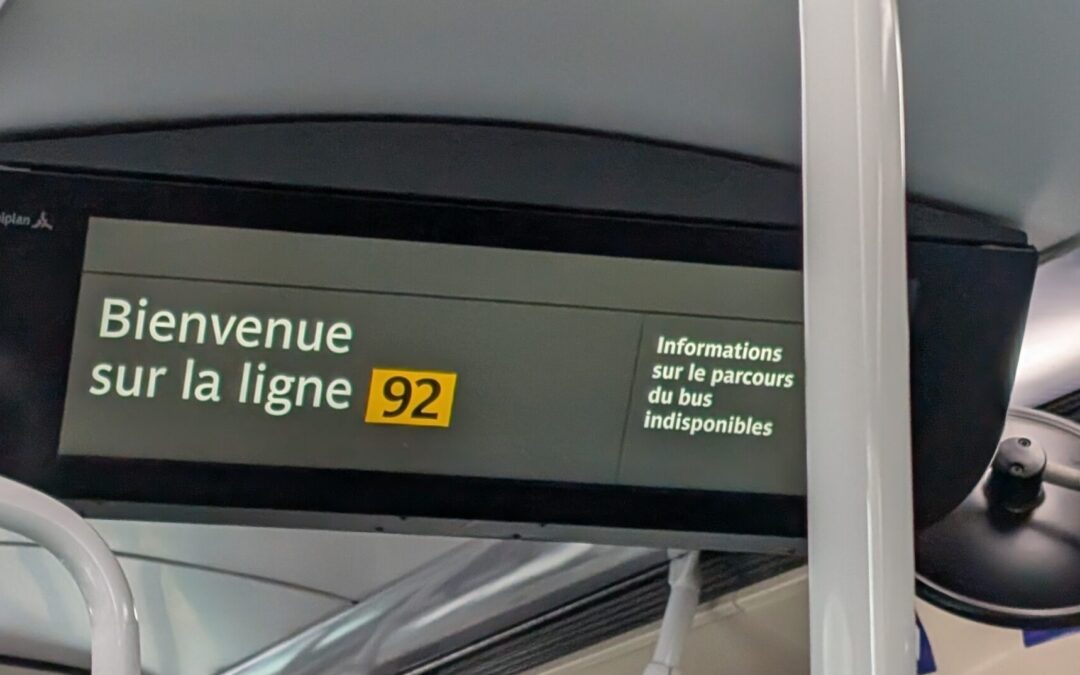
I had a déclic—a realization—recently, while riding the 92 bus home from my weekly doubles tennis game. An amazing proportion of my Paris life, and Charlie’s, has happened within eyeshot of this line.
My association began in the summer of 1977, when I had a journalism internship here after finishing graduate school. My office at McGraw-Hill was on the rue Georges Bizet in the 16th, just off the Avenue Marceau. I showed up on my first day wearing a brand-new suit, straight from the youth hostel where I’d perched after landing.
“Have you found housing yet?” the office administrator asked me. No.
A few minutes later, she came rushing into my tiny office holding the International Herald Tribune. “Look! There’s a room to rent at the Porte de Champerret. Just hop on the 92 bus and go check it out.”
Sure enough, it was a three-minute walk from the office to the bus stop on Marceau, and the northbound 92 let me out right at Champerret. The landlady, an elderly seamstress, was delightful and I took the room.
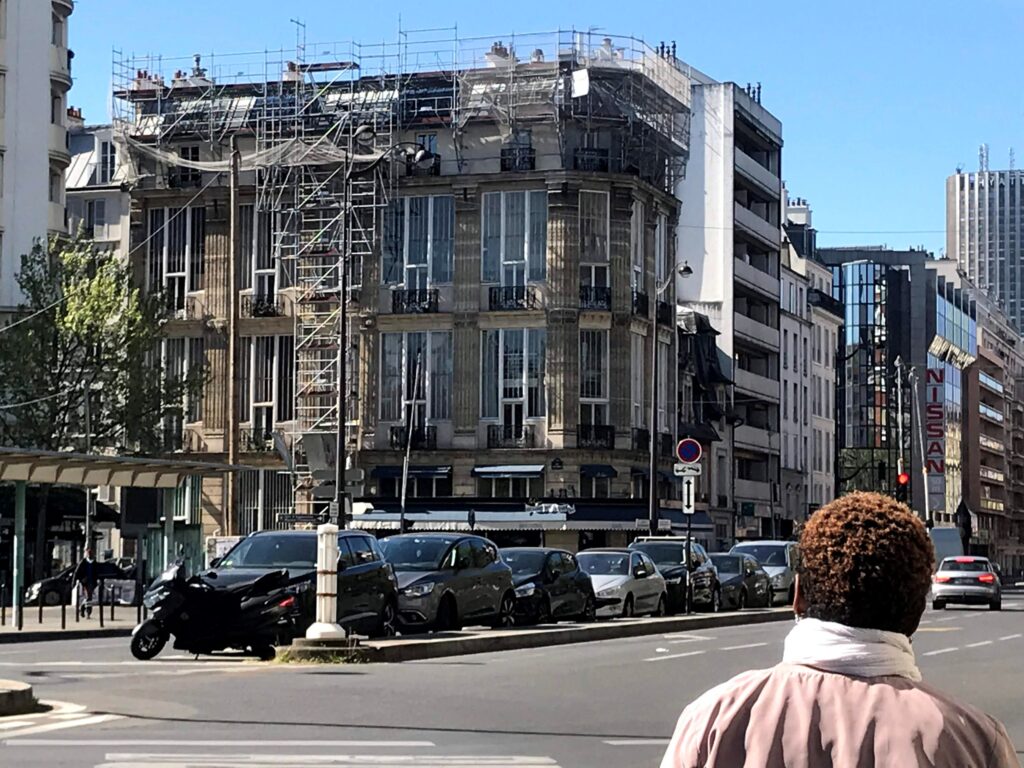
The neighborhood was grimmer than it is now. This photo from 2018 was taken before the construction of a tram line first tied up traffic for three years but then led to a burst of gentrification.
All summer, I rode the bus back and forth between home and office, except for the times when I went drinking and dining with colleagues who were only slightly older than me.
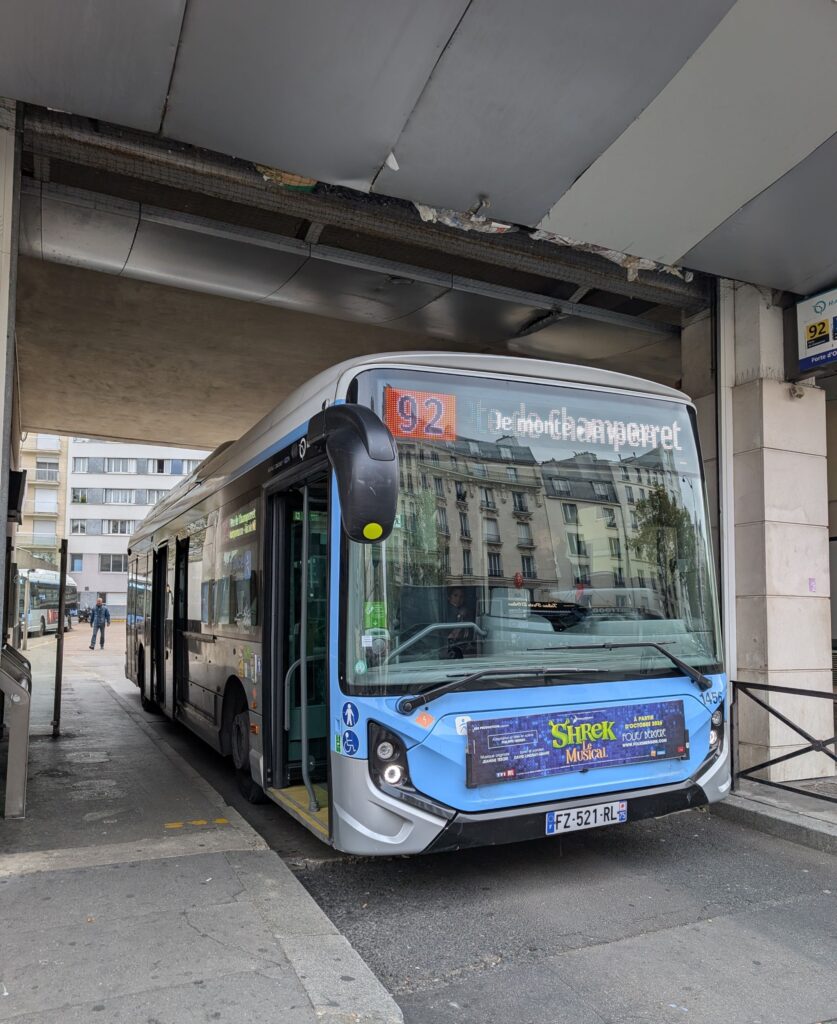
My tennis match had been at the Porte d’Orleans, at the other end of the line from Champerret. It’s the southern terminus.
Just north of Orleans was the rue d’Alésia. Down this street I took guitar lessons for 10 years or so. COVID and arthritis put an end to that, but I remember it fondly. (Most of the photos in this post were taken from inside a 92 bus.)
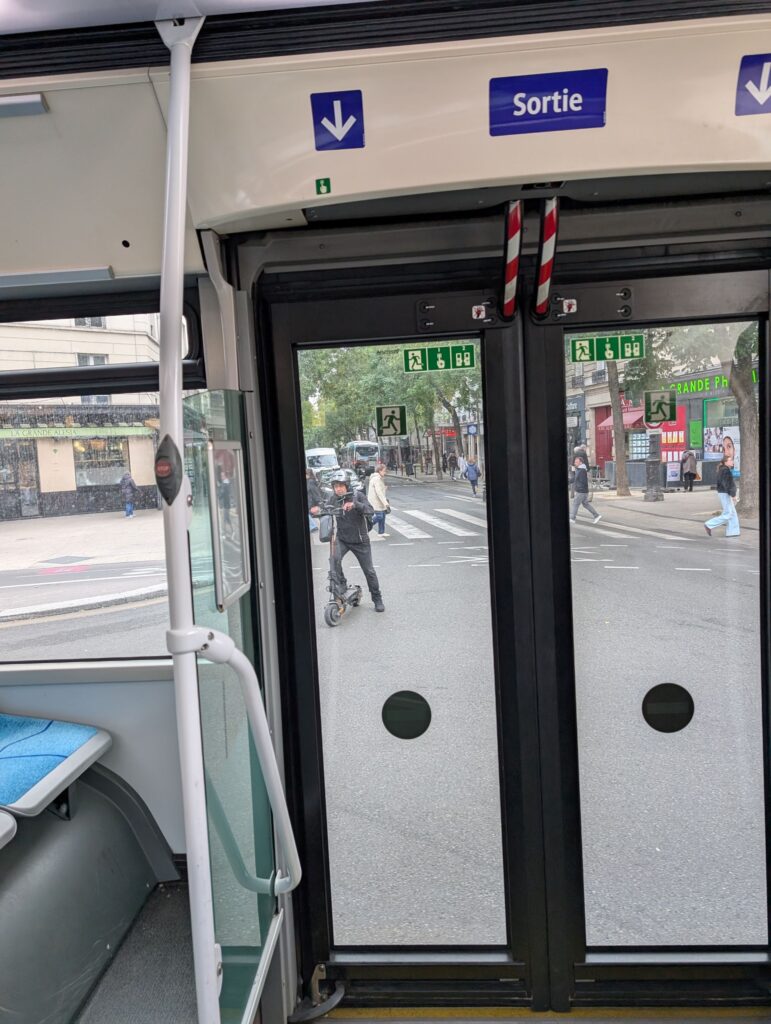
I take the Métro for most of my trips around Paris because it’s faster. But sometimes I just want the bus vibe. The Métro is dirty, noisy, touristy and rude, and you might get your pocket picked. The bus is old ladies with canes, babysitters with their young charges and fashionably dressed women. And it has windows.
Paris buses date farther back than the Métro, if you count the horse-drawn kind. Much farther back. So-called carrosses à cinq sols (carriages for five sous) began circulating in 1662, founded by philosopher and inventor Blaise Pascal under a monopoly granted by King Louis XIV. They carried six or seven passengers, but failed to gain traction. Omnibuses—bigger carriages carrying up to 18 people—began circulating in the city in 1828; motorized buses arrived around 1905.
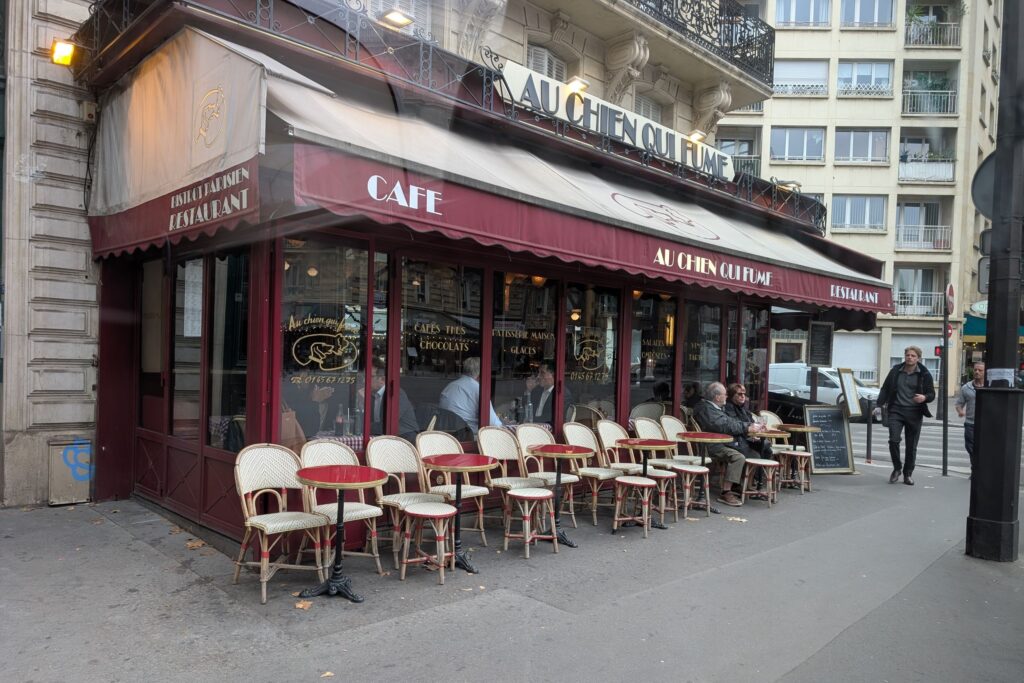
As my bus trundled up the boulevard Montparnasse it passed several historic-to-me sites. I wrote a mystery novel, never published, that focused on a group of young friends who hung out at Au Chien Qui Fume, one of my favorite café names.
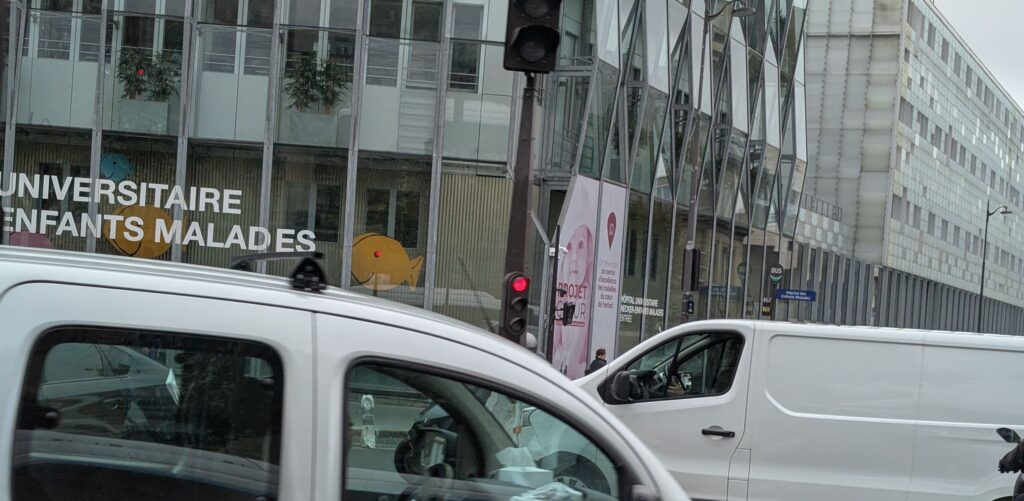
Then appeared the Necker Children’s Hospital, where Charlie and I brought six-year-old Henry in a panic one night because he was showing symptoms of meningitis. He didn’t have it, but it took a spinal tap to get the diagnosis.
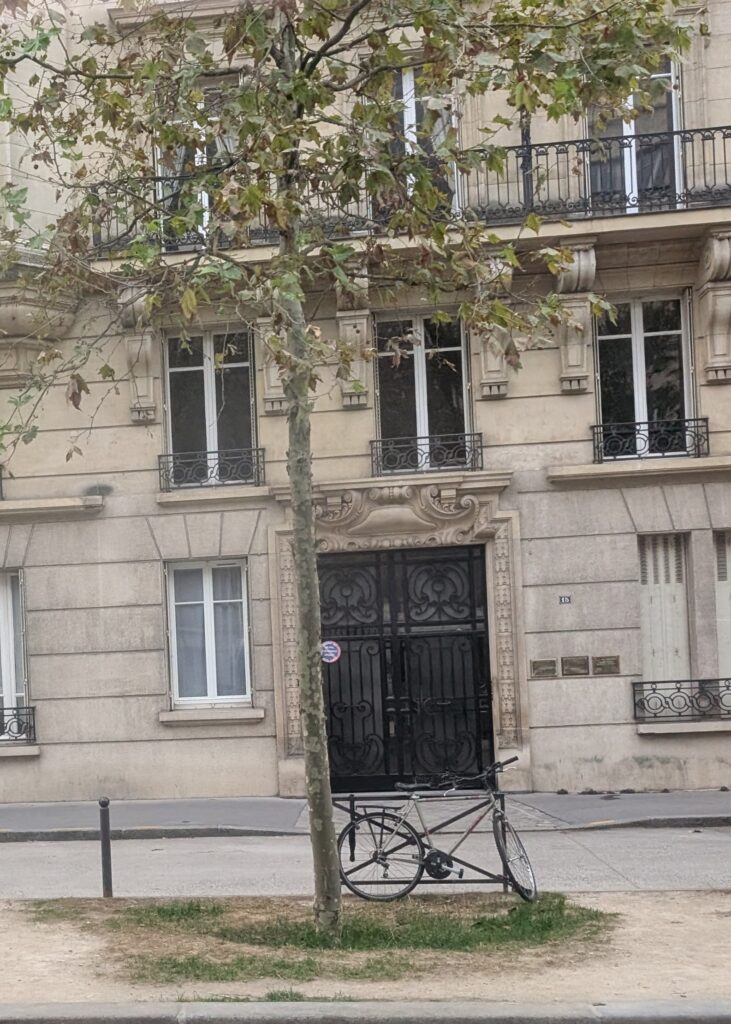
And a cluster of memories along the avenue de Tourville, where we lived at No. 15 when we first came to Paris in 1996.
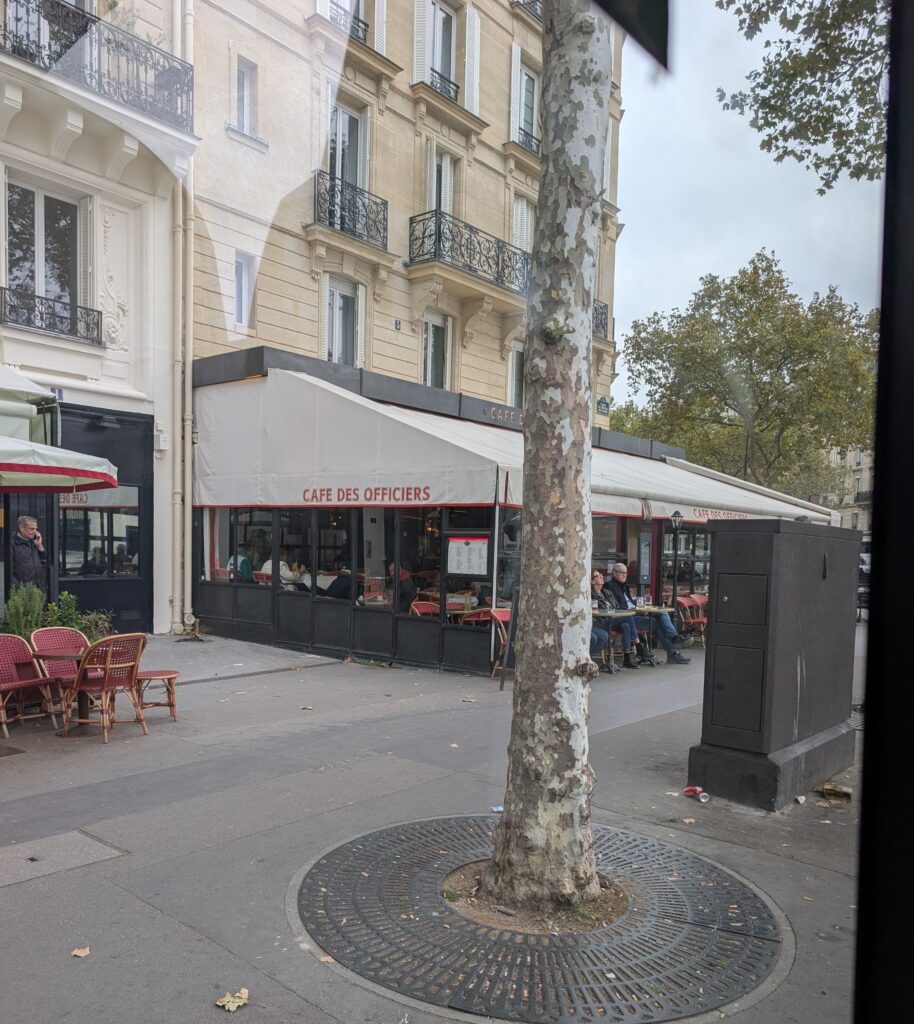
On our first night, we dined at this café on the place Ecole Militaire. It was terrible, but we didn’t know how to pick eateries then. Louise was served hot milk and Henry complained that his hot dog was came in an unfamiliar bun. It was a baguette.
A block north on avenue Bosquet was a little fifth-floor apartment we bought with the profits from selling our house in Washington after we decided in 2000 that we weren’t returning. We rented it to friends and friends-of-friends, selling it 10 or so years later to buy the apartment on boulevard Pereire.
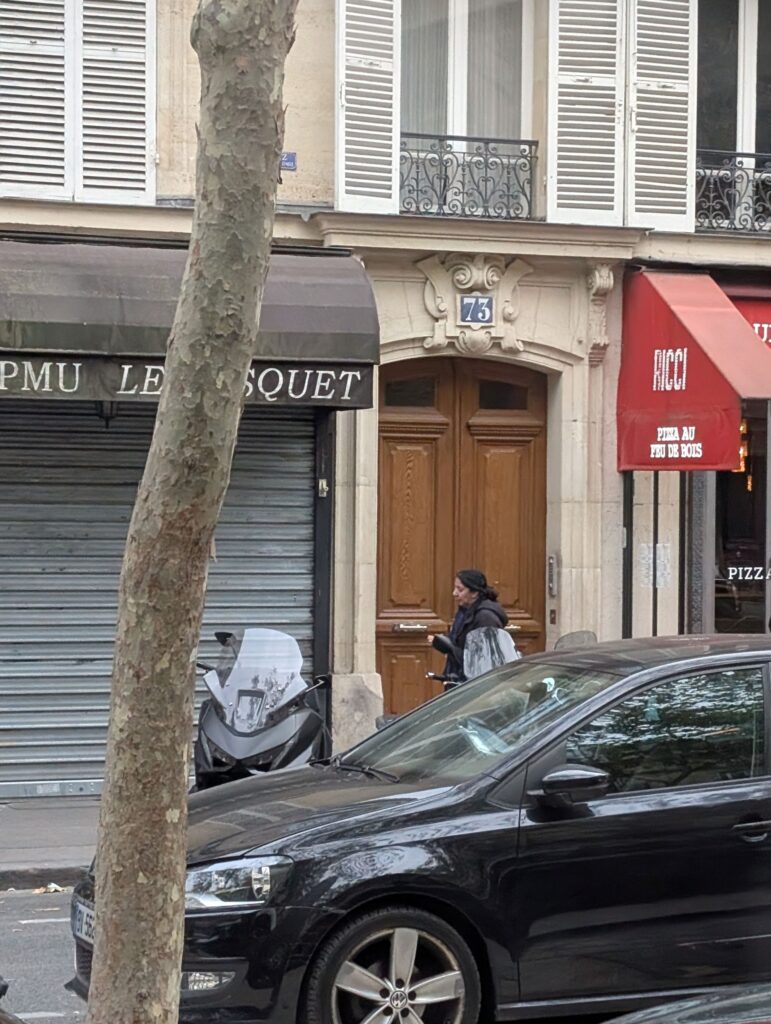
Another thing I like about bus lines is watching how the neighborhood changes as you ride along. This is less true of the north-south 92, which runs mostly through bourgeois territory. But the 69, for instance, starts in eastern Paris and ends up at the Eiffel Tower. I wrote a mystery story that takes place on one east-west trip of that bus.
It turns out there’s even a book about the 92 line. In “No. 91/92: A Diary of a Year on the Bus,” Lauren Elkin chronicles her daily commute to and from work, using only the Notes app of her iPhone C. This was in 2014. The Goodreads summary describes it as a Perecquian homage, which I had to look up. It means something written under formal constraints. Like, Georges Perec’s “La Disparition” is written without using the letter “e.” Elkin observes the passengers, the signs, the map. Later, she writes of the Charlie Hebdo attacks and personal tragedy.
Just after my 92 crossed the river, I got a glimpse of what has become known as Princess Diana’s flame.
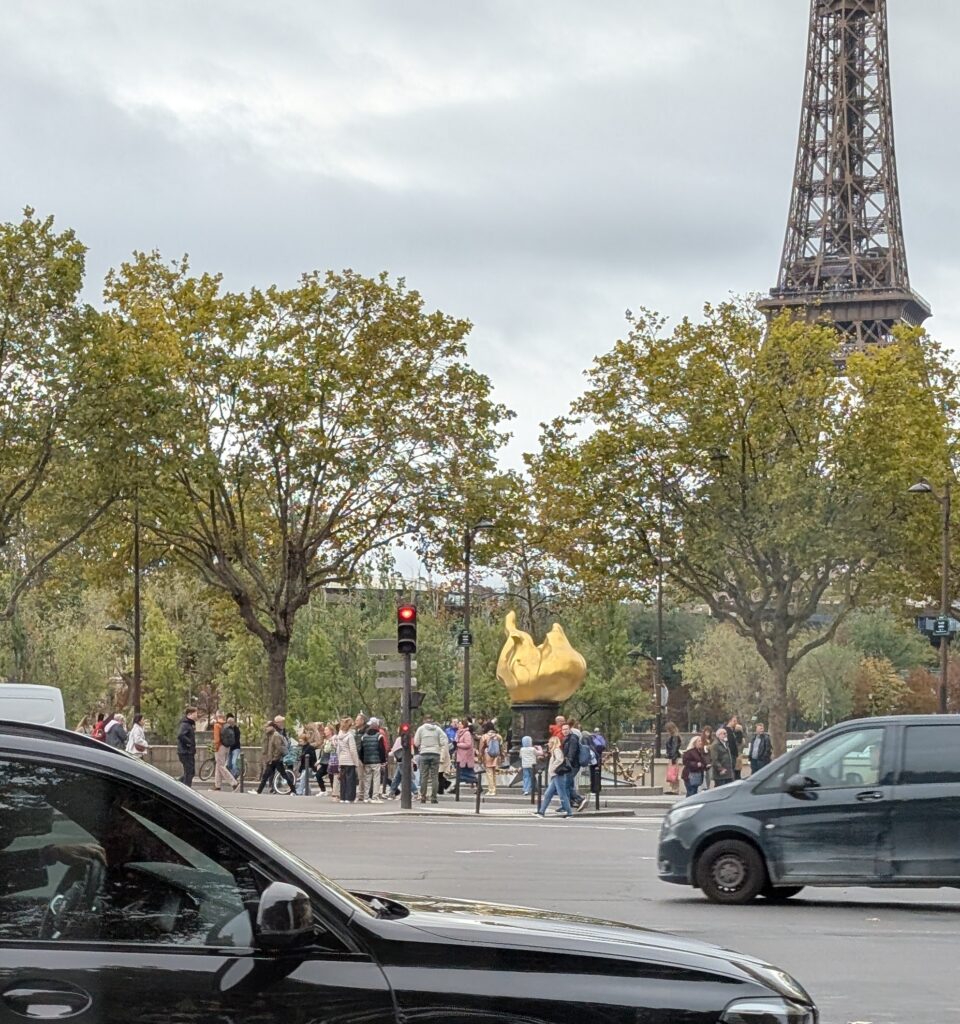
A gold-leaf-covered replica of the Statue of Liberty’s flame, it was installed years before she died in a 1997 auto accident in the tunnel below. The statue had been given to the city of Paris by the International Herald Tribune in 1989, financed by donors. It became an informal shrine where people would come and leave flowers and messages for the late princess. Charlie and I both had to come here and interview people at various times during our Washington Post coverage of the tragedy.
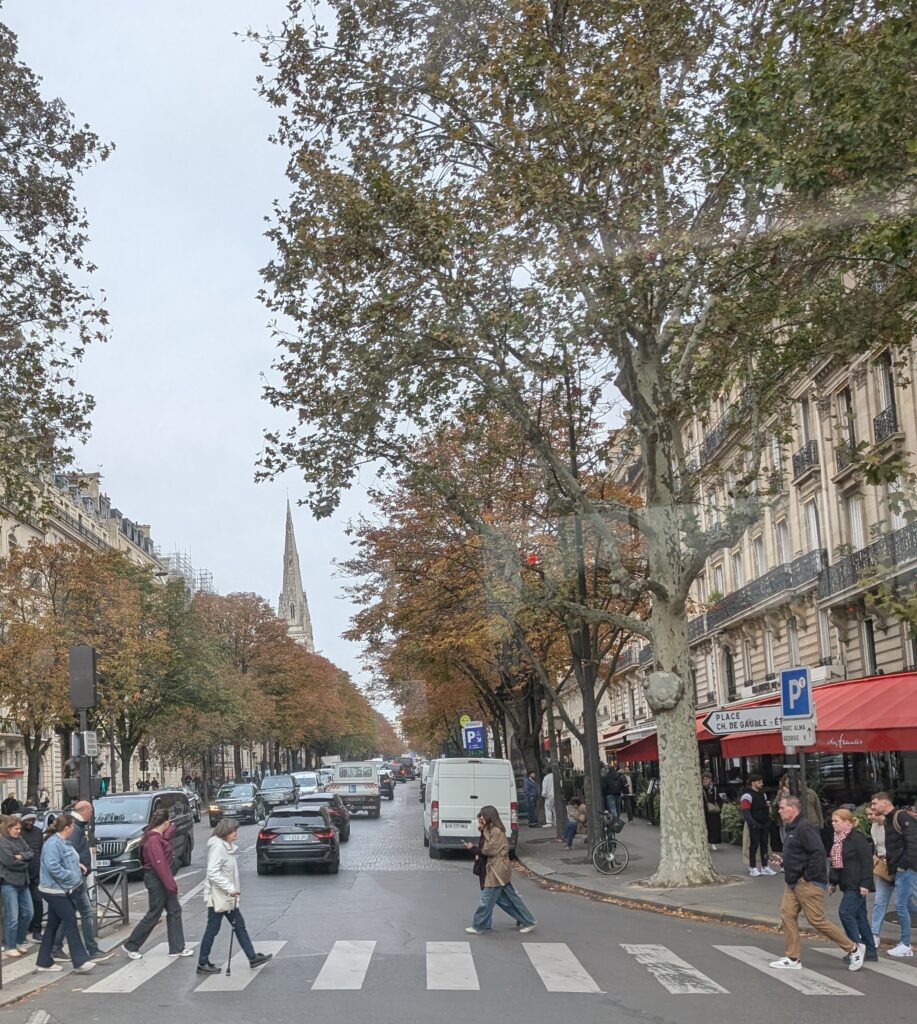
And just north of the place de l’Alma could be seen the spire of the American Cathedral, an Episcopal church we began attending in 1996 and became very involved in. I still am. Charlie’s memorial service will be held there next March.
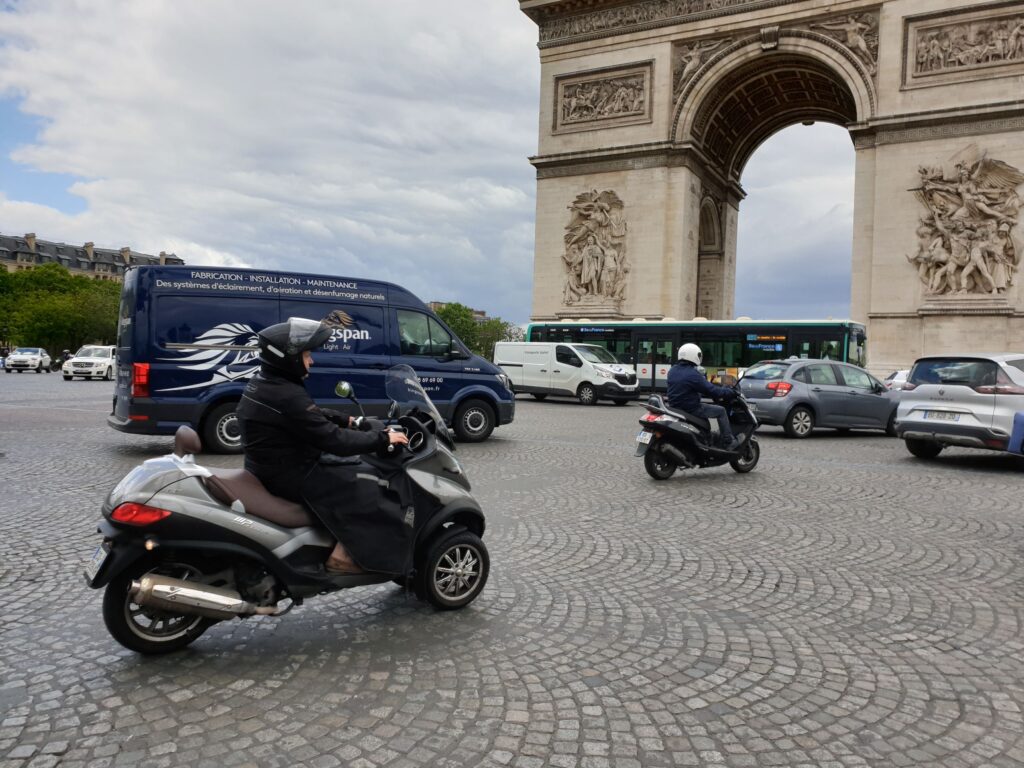
The bus went around the Etoile, where Charlie had swiftly learned to maneuver the Washington Post car when we arrived. It took me much longer to figure out how to navigate the circle.
It was a short hop from there to the place Maréchal Juin, where I got off. Charlie would get on the bus here every day to go his job as director of the American Library. His favorite mode of transportation in Paris was driving, but when the BMW died and was sent to Senegal for parts, he had to switch to the bus.
We rode the 92 barely a year before he died. He was being treated in Virginia, and this was one of his last trips to Paris. We had dined with dear friends in at the south end of the 7th arrondissement on one of those June nights where the sun seems to hang in the sky forever. Charlie and I decided to go home on the 92 rather than take an Uber.
We passed the Holy Trinity Cathedral of the Russian Orthodox Church right before the Seine, just as the setting sun was sending golden rays through the tips of the onion domes. This photo, not taken then, doesn’t do justice to the quality of the light.
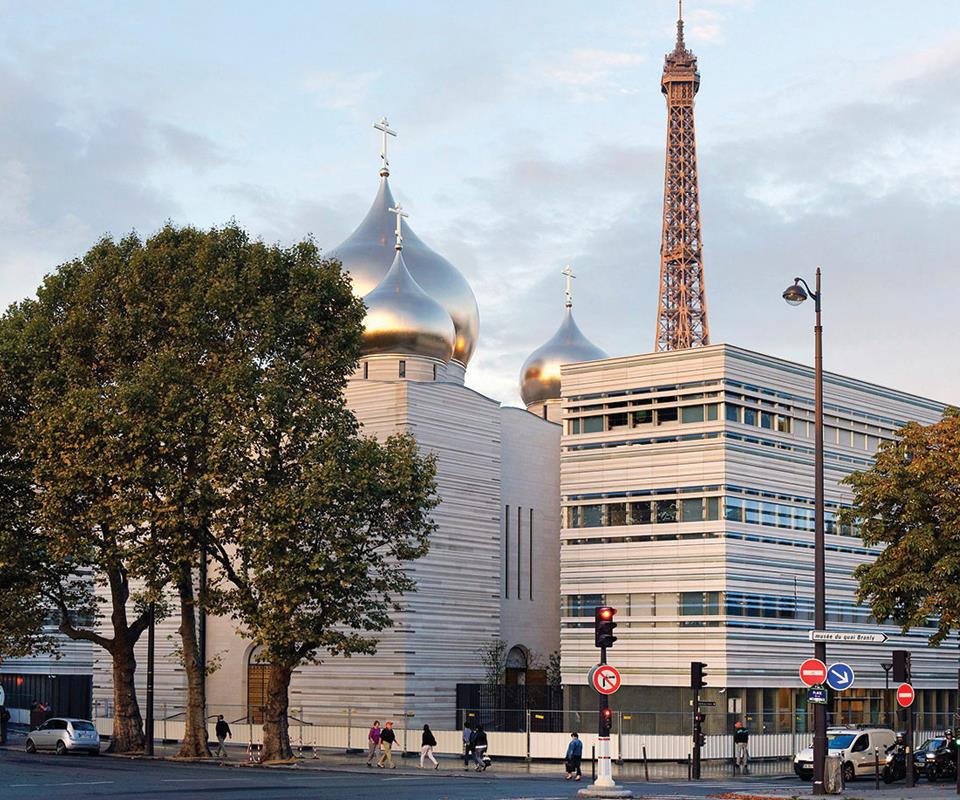
Looking out the window to the left, we both remarked on how beautiful it was.
“I wish I had more shelf life,” Charlie said. It was a rare mention of his mortality.
I said I wished he did too, and we took each other’s hand.