
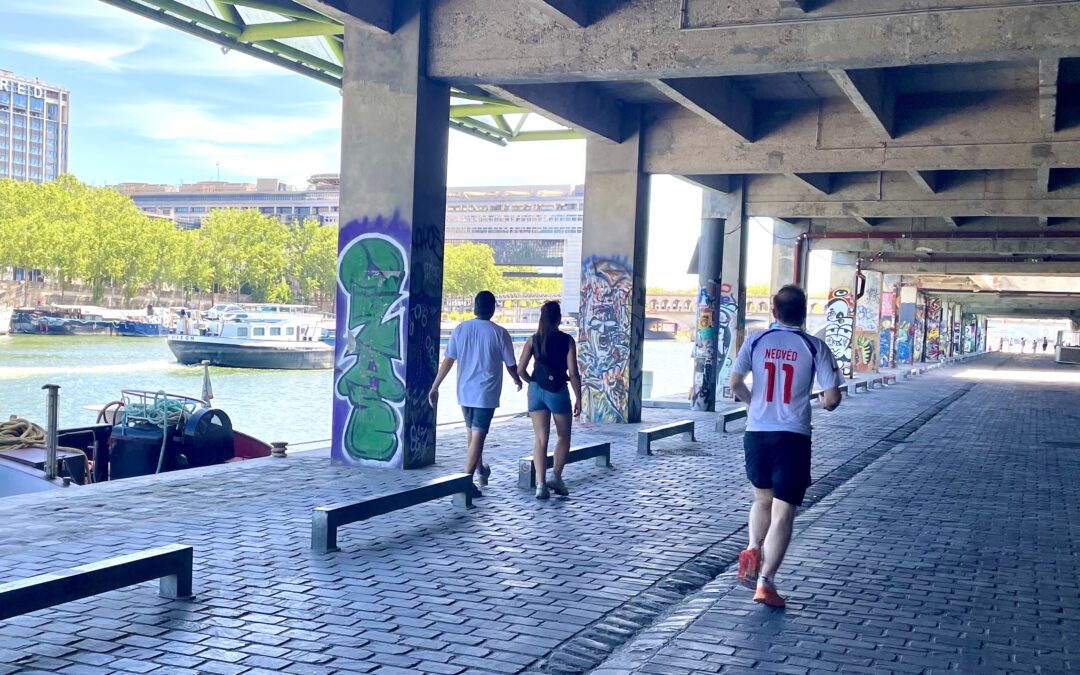
I just proved it’s possible to walk through a large section of Paris without seeing a single Haussmanian building. That is, the architectural style that embodies the city: cream-colored stone, grilled balcony railings, ornate decorations.
This wasn’t Francie’s and my intention when we set out to walk around in the eastern 13th arrondissement, just south of the Seine. But, as our promenade shows, new stuff is happening here.
It wasn’t my first time touring that part of town. My sister Christine and I had done a different circuit in the 13th back in December 2021. Our itinerary this time was much closer to the river.
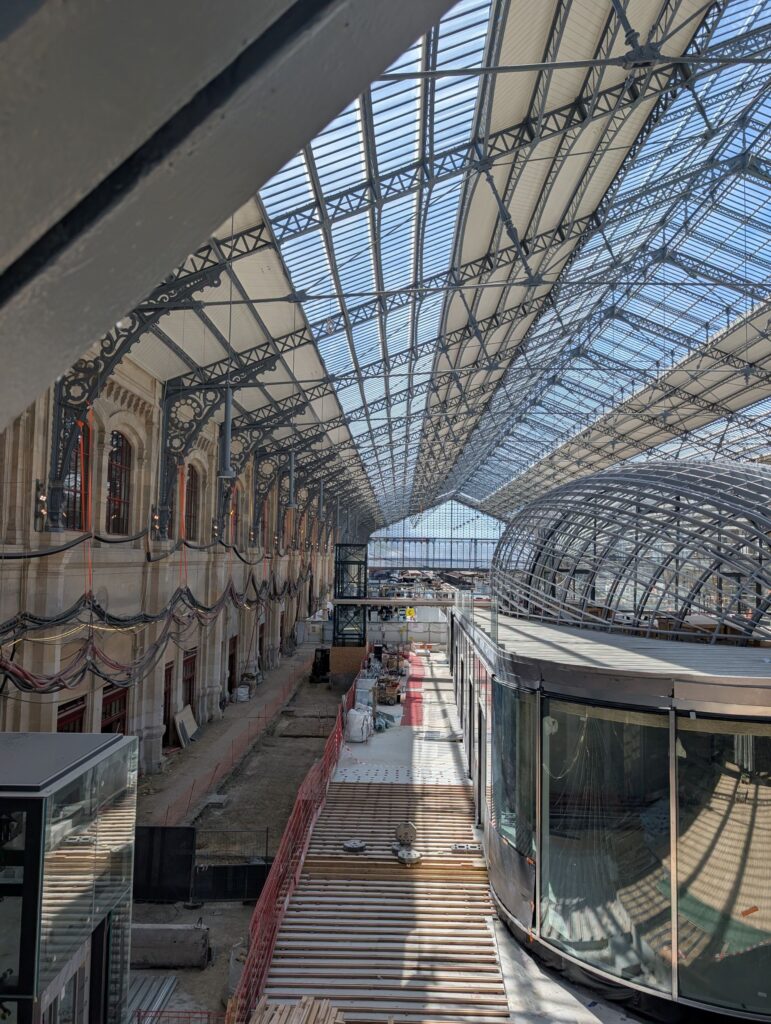
I started at the Gare d’Austerlitz. The last time I was here, when I was writing about Paris train stations, it was under construction.
Almost four years later, it still is.
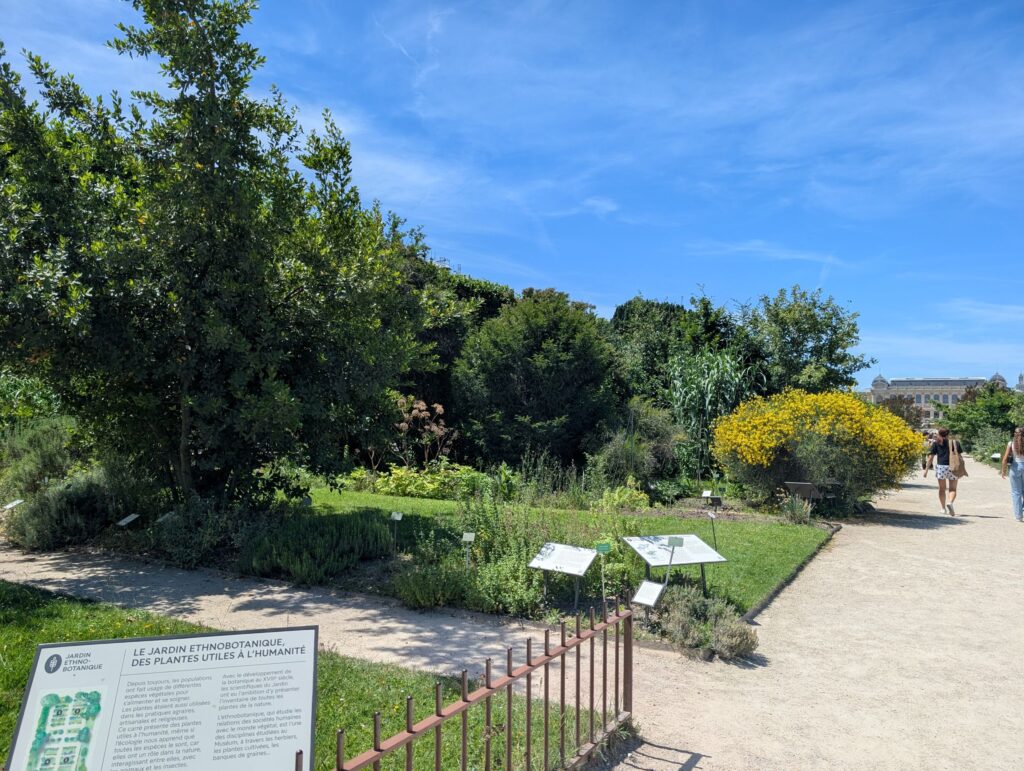
Francie and I met up at the Jardin des Plantes next door.
And then set out along the quay on the river heading east.
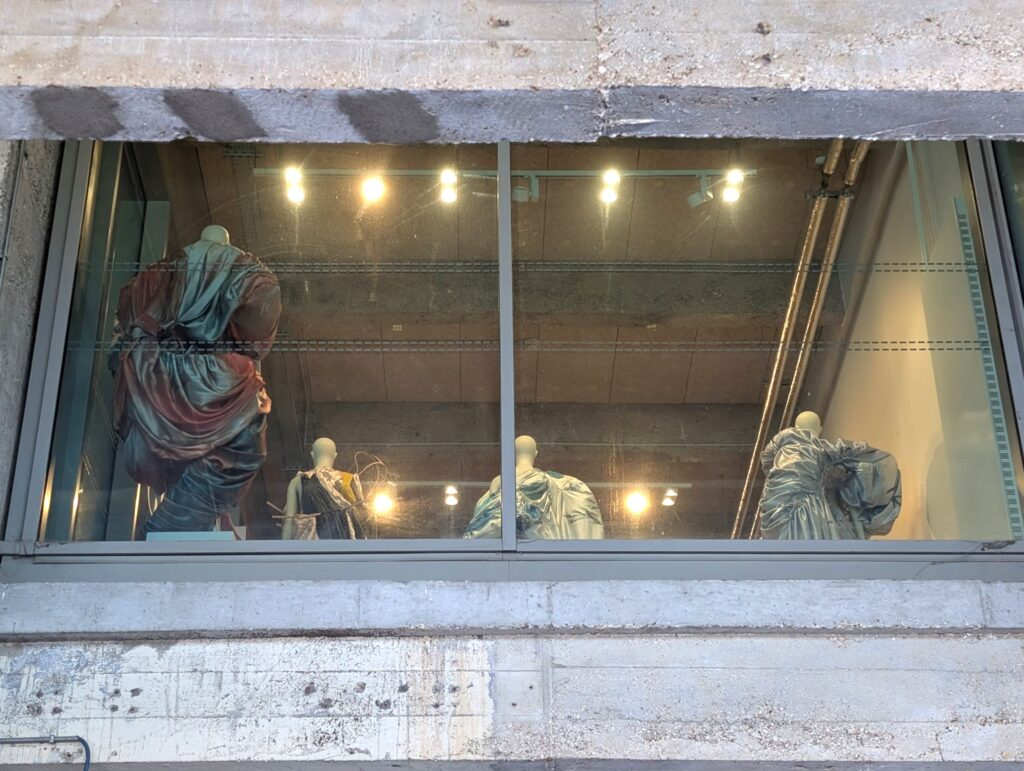
Warehouses filled with goods coming off and on the trains through the Austerlitz station once stood on this bank. Today it is one new building after another. The Institut Français de la Mode, which offers postgraduate courses in fashion and applied research, seems to be made entirely of concrete and glass.
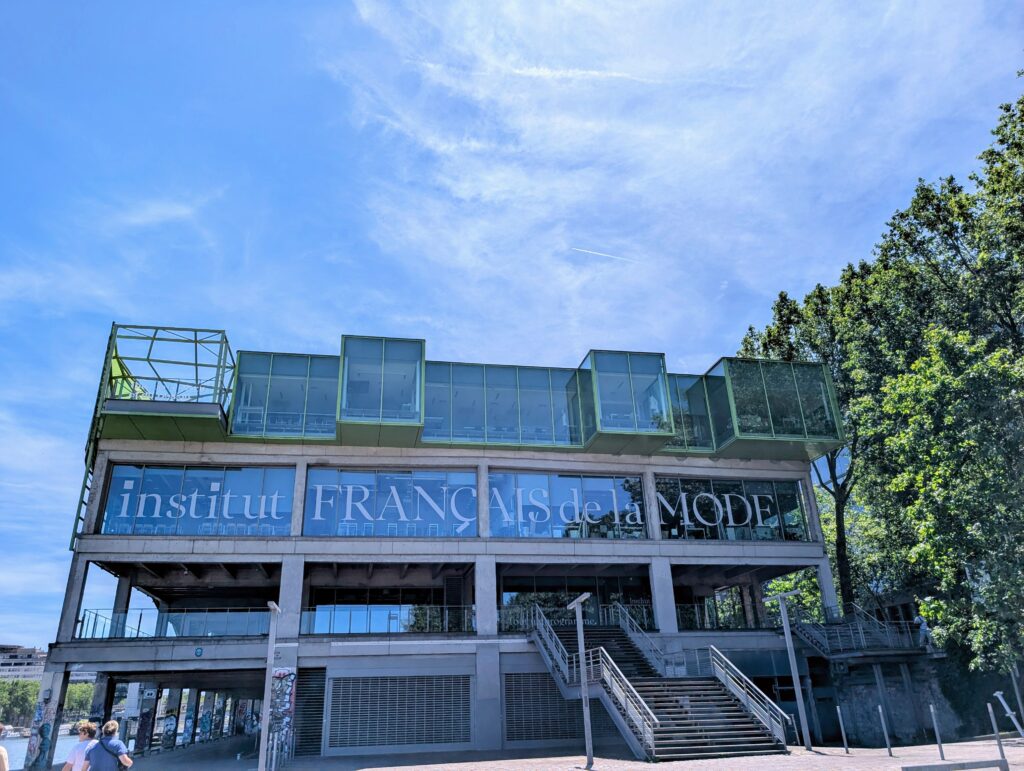
We got a few glimpses of what happens inside.
We also saw a largely unexplained apartment building with a distinctive look.
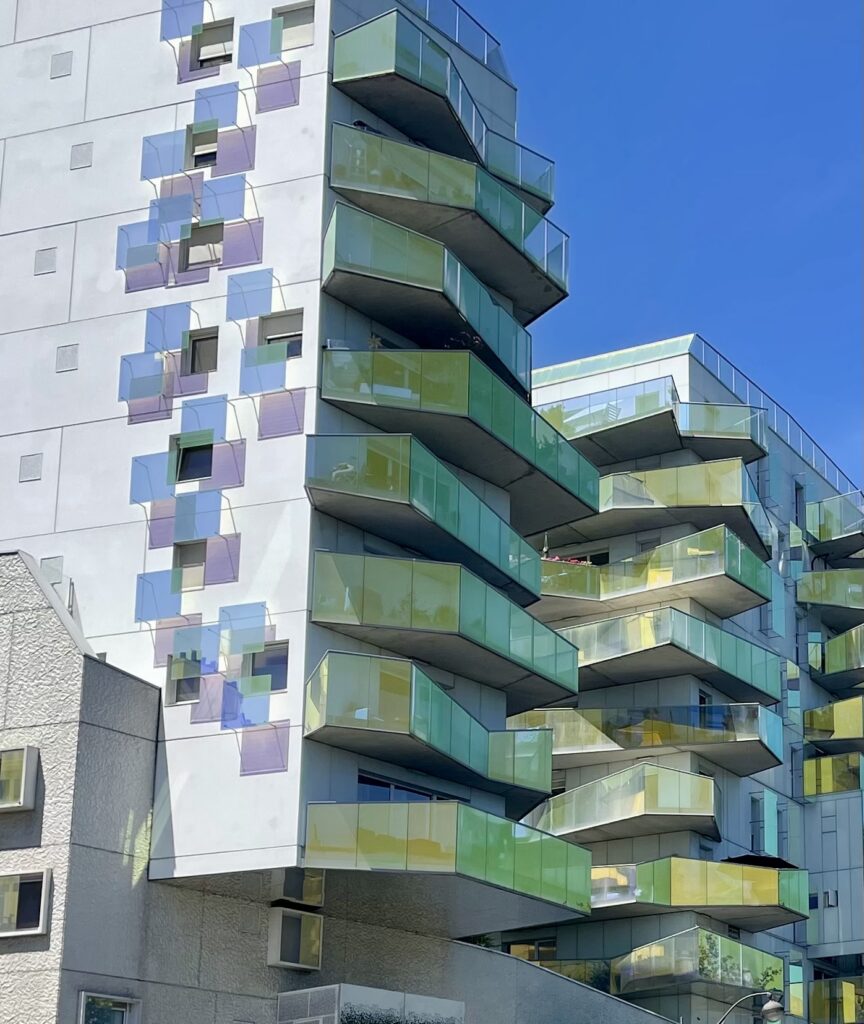
Photo: Francie Plough Seder
My trusty guidebook, Nicolas Le Goff’s “Another Paris,” says only that it was designed by Bernard Buhler and that its glassed balconies send out golden or violet reflections, depending on the light.
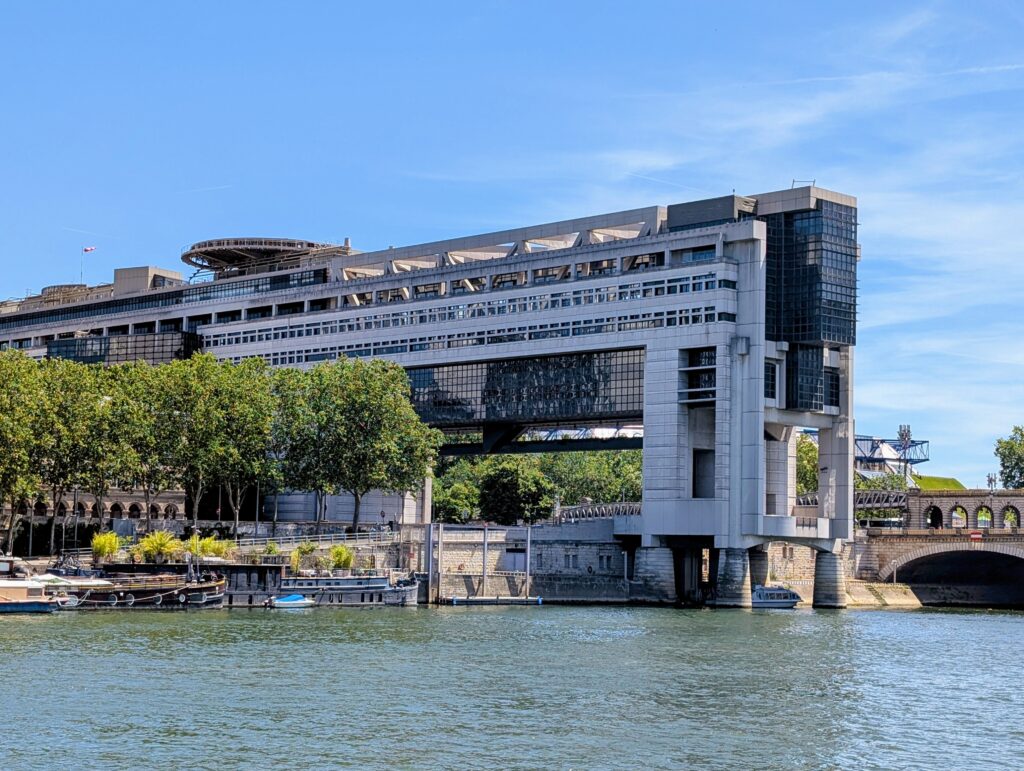
On the other side of the river was an imposing building that I’d visited for work several times: the Finance Ministry. Taxes are taken very seriously here, probably because there are so many of them. The minister’s office, where I once brought Washington Post chief Katharine Graham for an interview with the finance minister, is on the part reaching out above the water. When you see French newspapers mysteriously referring to “Bercy,” this is what they are talking about.
We departed from the book’s itinerary and headed inland because we both wanted to see Station F, a well-known business incubator in a former rail freight warehouse. The web site says it has spawned 9,000 startups and has more than 700 investors. I had thought young and hungry tecchies worked on weekends, but on this particular Saturday it was closed up tight.
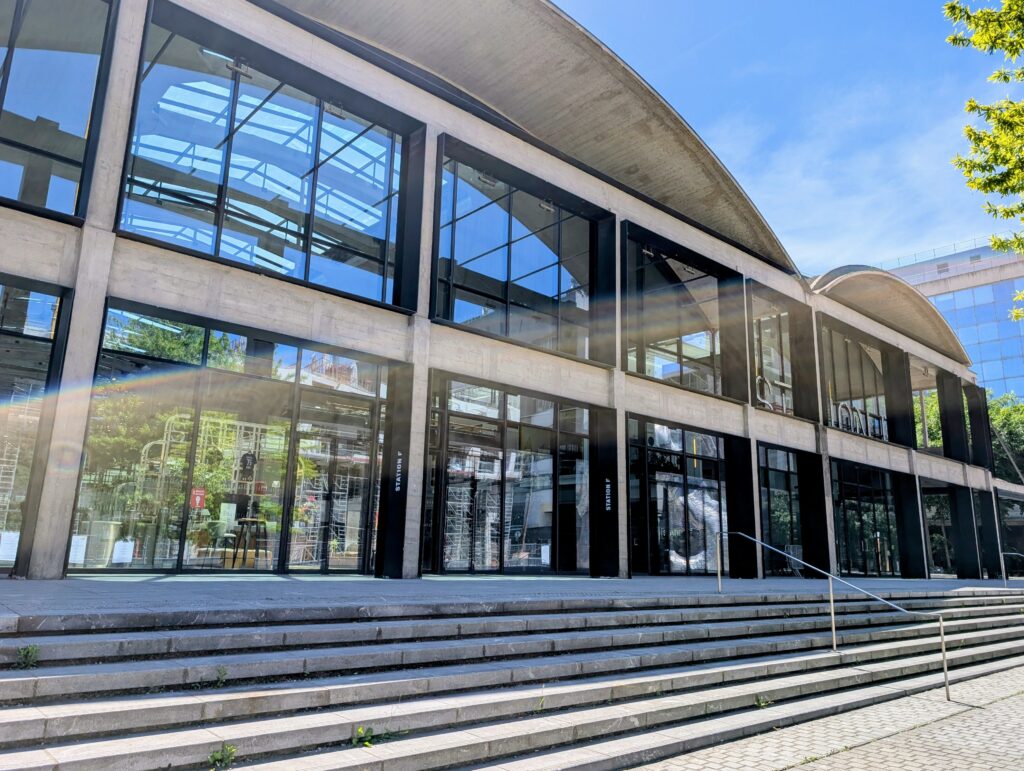
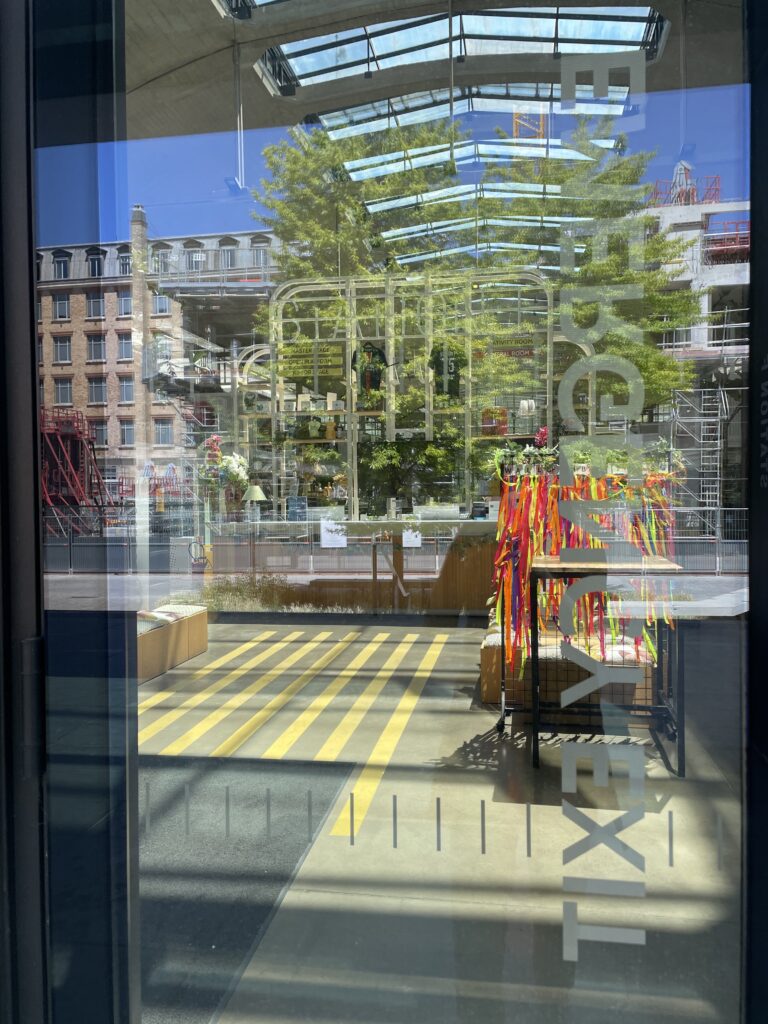
Photo: FPS
There were some dancers rehearsing, or maybe having a class, outside.
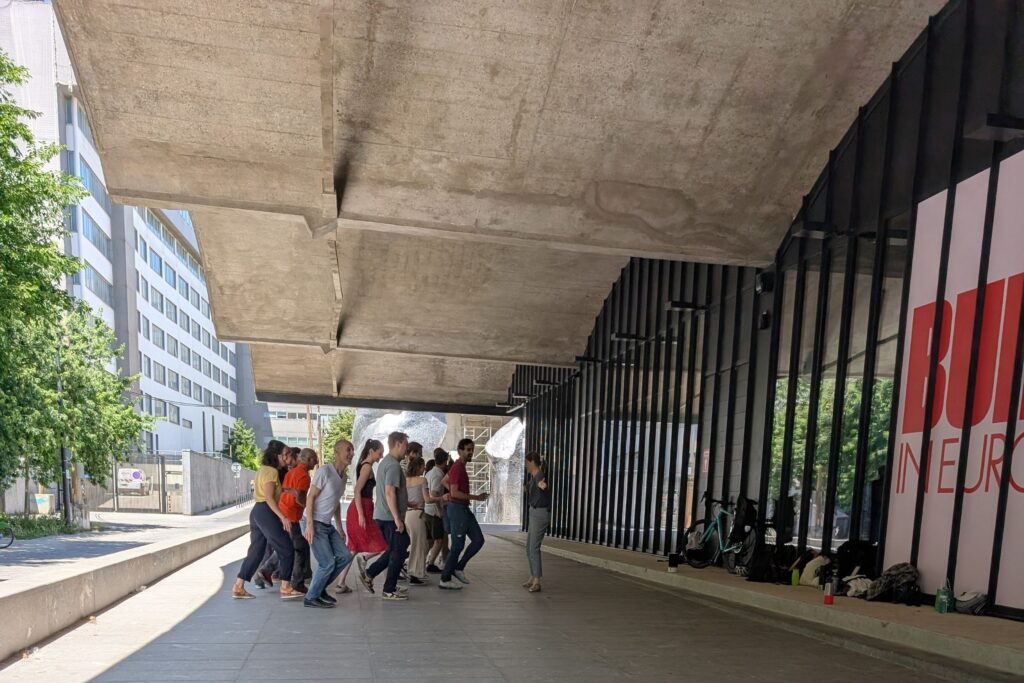
From there we turned north again and went around the four towers of the Bibliothèque Nationale, the national library. We had both seen it before, so just skirted the edges. Just as well, since it doesn’t have open stacks.
On the north side we came across a footbridge named after Simone de Beauvoir, the intellectual and author who wrote “The Second Sex.”
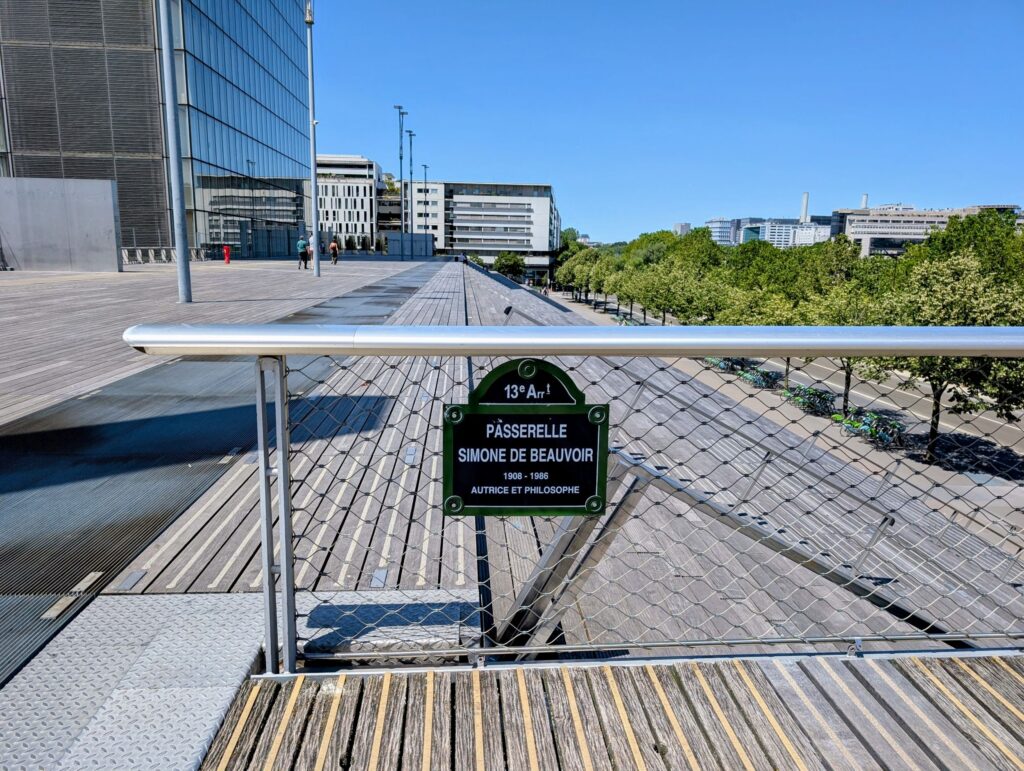
It seemed an odd location to commemorate her, since she and her partner, existentialist Jean-Paul Sartre, were so closely identified with the Saint-Germain-des-Prés neighborhood in the 6th arrondissement.
The hilly bridge led across the river to a park. Behind us was a good view of the library’s towers.
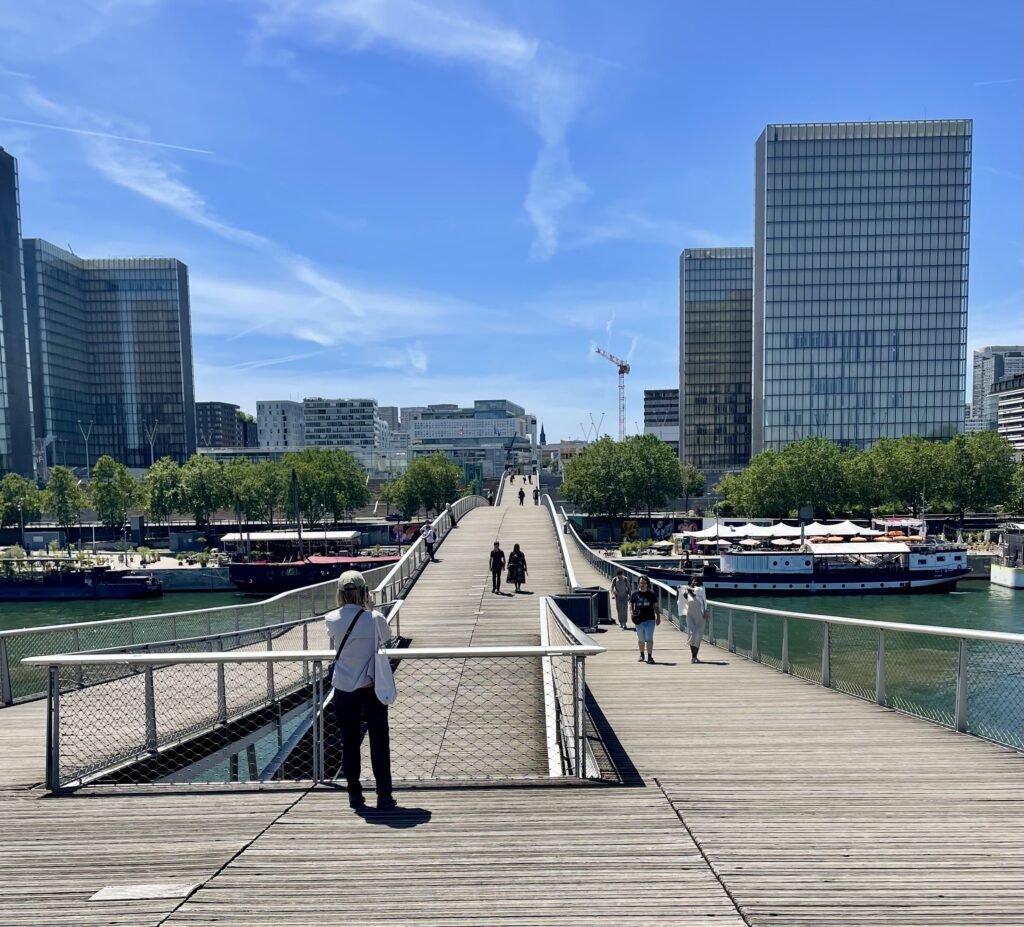
Photo: FPS
From the middle of the bridge we looked west and saw several of the sights in Le Goff’s book that we’d skipped when we were walking along the bank. This was a better view anyway.
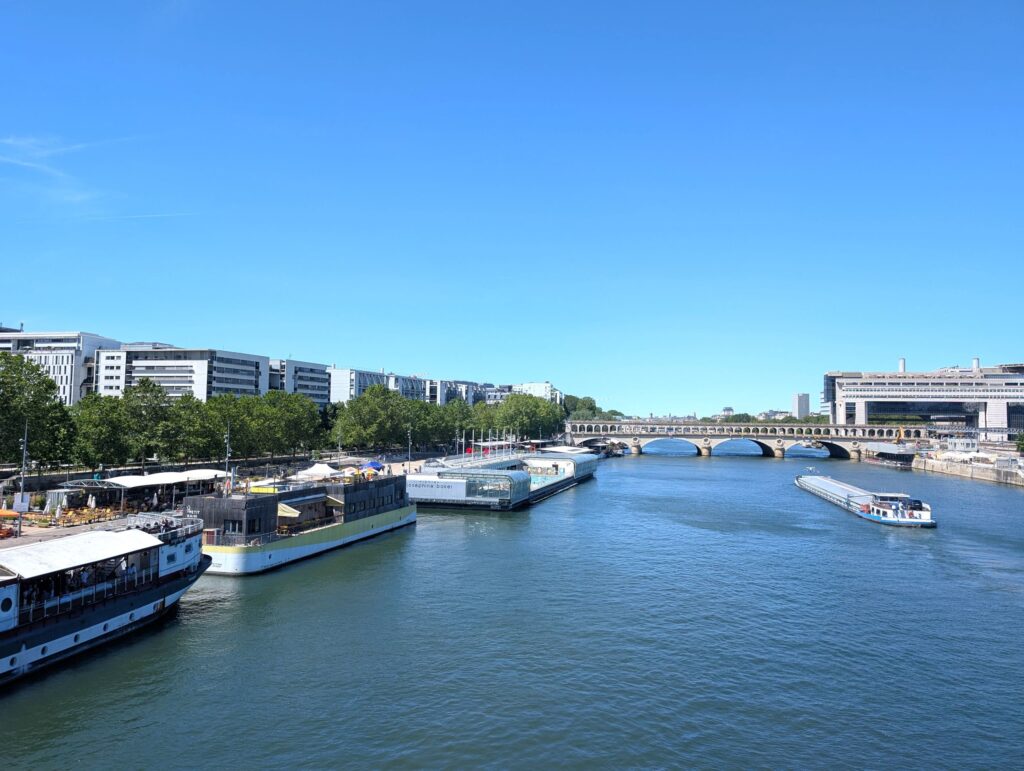
Farthest from view is the floating Piscine Joséphine-Baker. What better place to swim and sunbathe than on a river? As far as I could tell, it’s open to the public. It also has a closeable roof in case of rain.
Again, though, the famous Black American singer/dancer was not an habituée of the 13th arrondissement, performing instead on the Champs-Elysées and at the Folies Bergère in the 9th arrondissement. She also aided the French Resistance and spied for the Americans during Paris’s World War II occupation by the Nazis.
The middle vessel in the photo is a concert hall, bar and restaurant and the closest one seemed to be a party or restaurant barge.
I meant it about not seeing Haussmanian buildings, but we did view some old structures. The Pont de Bercy, just west of the footbridge, in 1904 replaced a bridge that had been built in 1832, which itself replaced a ferry.
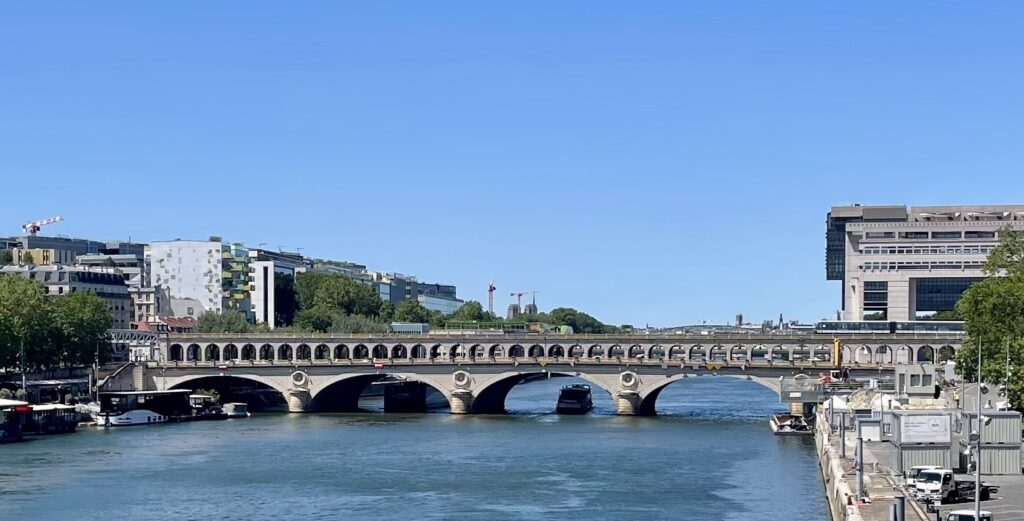
Photo: FPS
That doesn’t compare with the Pont Neuf, the oldest standing bridge in Paris. It was finished in 1607 under King Henri IV. What is now the 13th arrondissement was mostly or semi-rural then, with only a church, the Gobelins dyers and tapestry makers, medieval houses and some tanneries along the now-buried Bièvre River. A good subject for the next walk.
Anne, thanks so much for a great tour of updated Paris!
Thanks so much!
Delightful tour and account, Anne! Would love to see more of the modern Paris!
Thank you! Come on over.
Lovely piece. Thanks to you both. I would love to revisit (no I wouldn’t) a piece the Trib did circa 1980 about how the French just couldn’t get contemporary architecture right. Written from the 17th as I recall.
Got my vote on that one!
Excellent timing (and excellent piece)! We just passed several of these sights in our taxi ride to Gare de Lyon. As soon as I opened fb, your piece was the first thing in my feed!
We aim to please!