
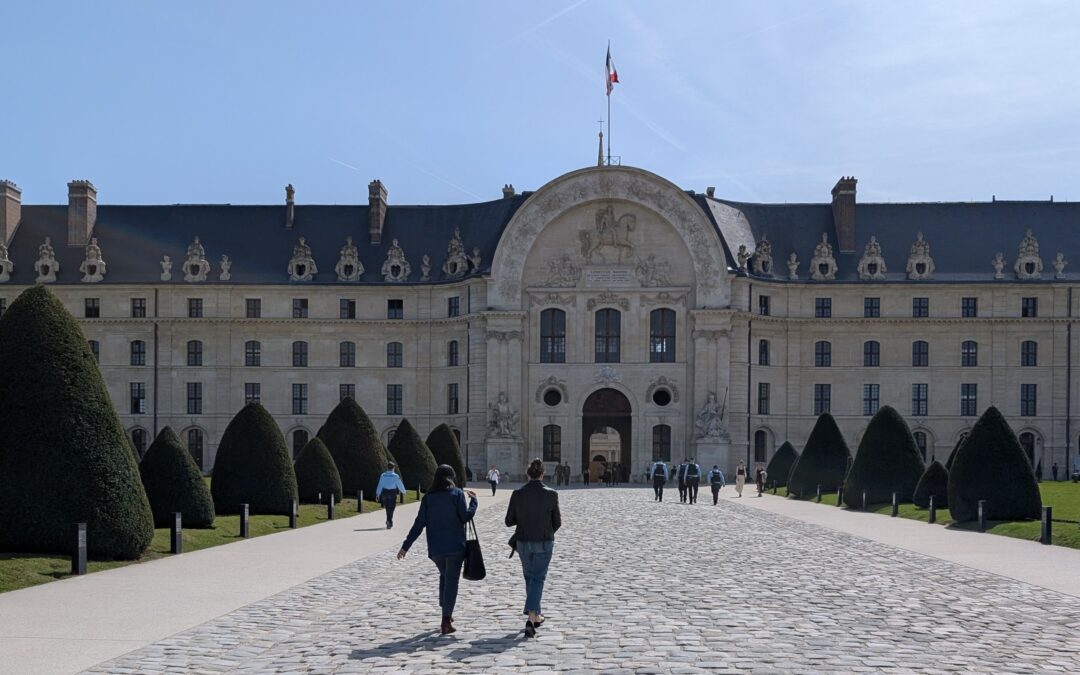
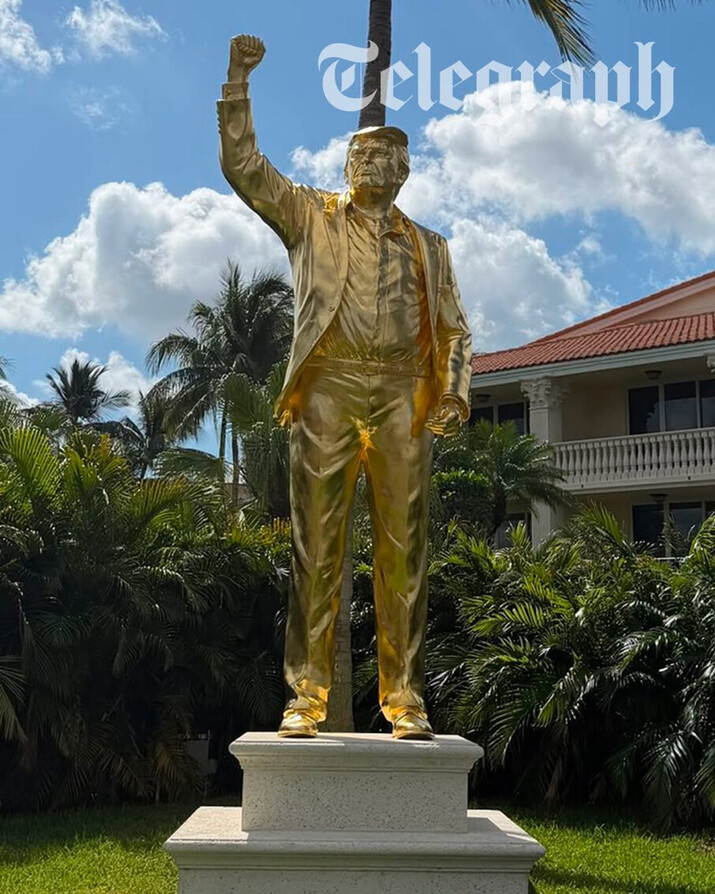
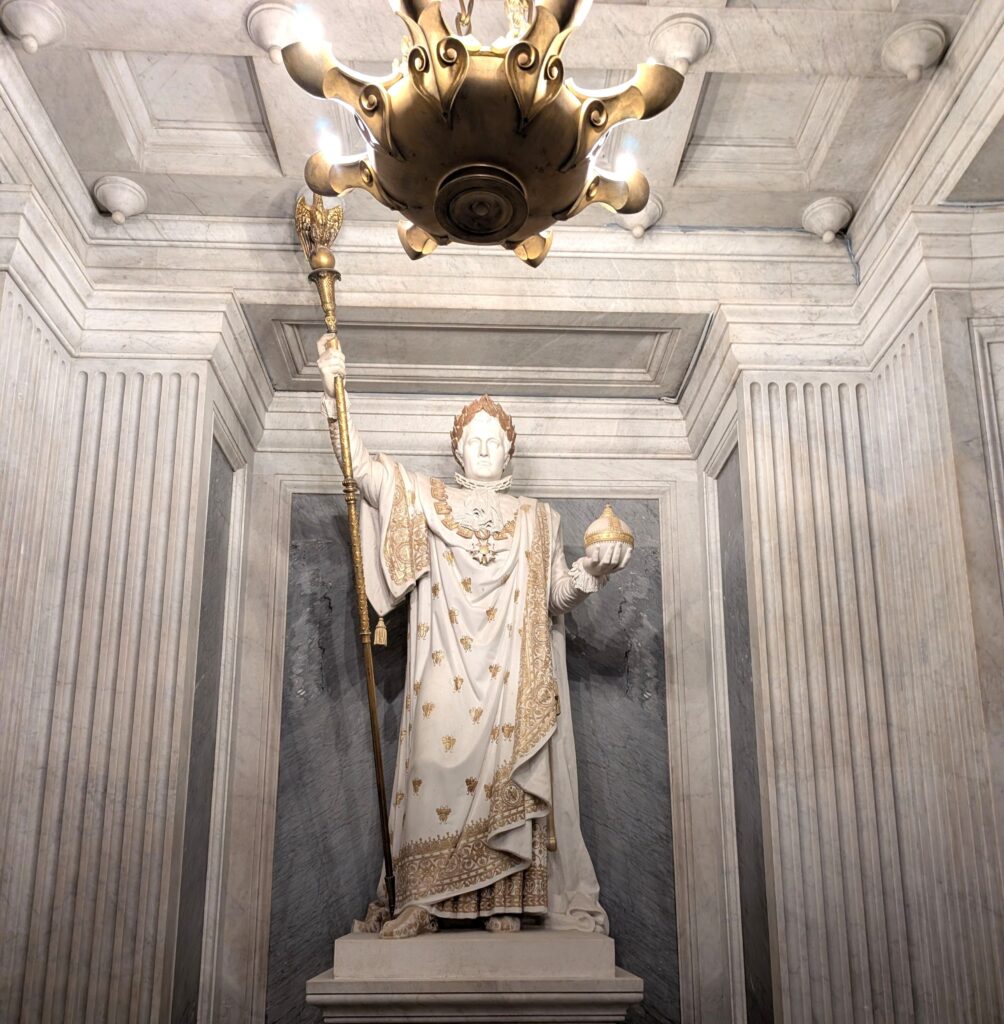
He sleeps surrounded by gilded artwork. The remnants of his power are all around: his minions nearby, the names of the battles he fought posted everywhere. A golden statue, right arm raised, depicts him in regal fashion. An enormous triumphal arch commissioned by him rises in the capital city. His legacy includes a crackdown on civil unrest, the centralization of power and a move away from democracy.
Similarities between Emperor Napoleon Bonaparte and the current U.S. president, though, stop right there. Napoleon was a savvy military genius who succeeded in almost all his conquests. He brought order to a troubled country, created durable state legal and educational systems and set up a respected civil service. Also, he was a voracious reader of books—Voltaire, Rousseau, Corneille, Racine.
I don’t think I need to highlight how those accomplishments are not mirrored by the current U.S. president.
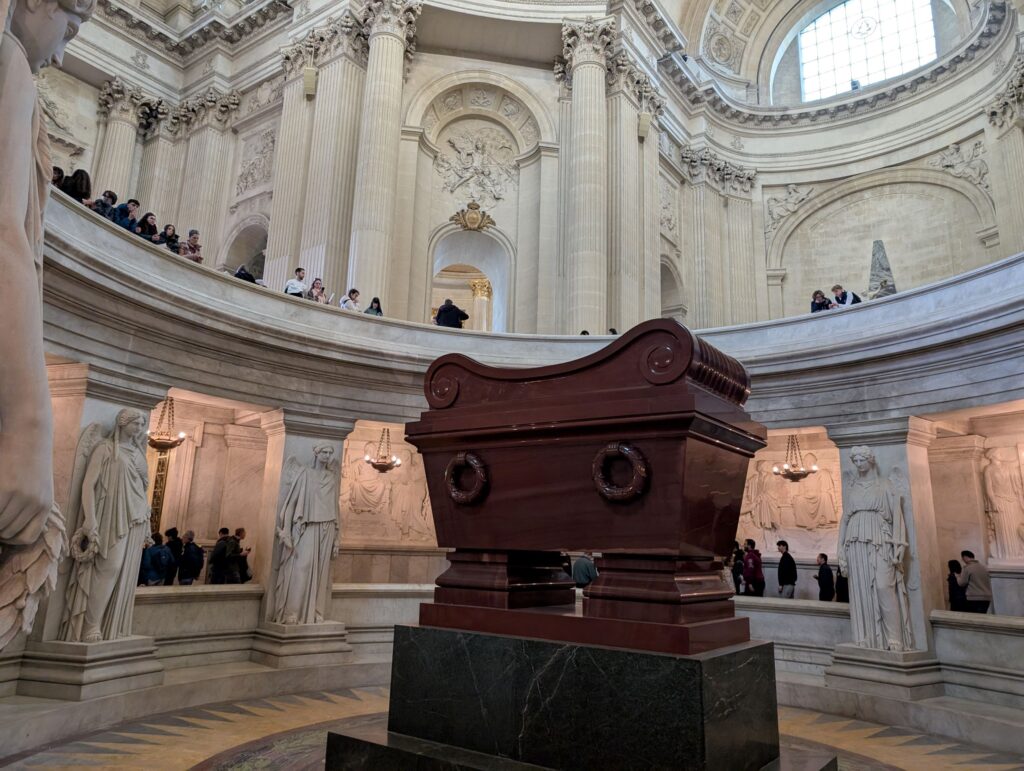
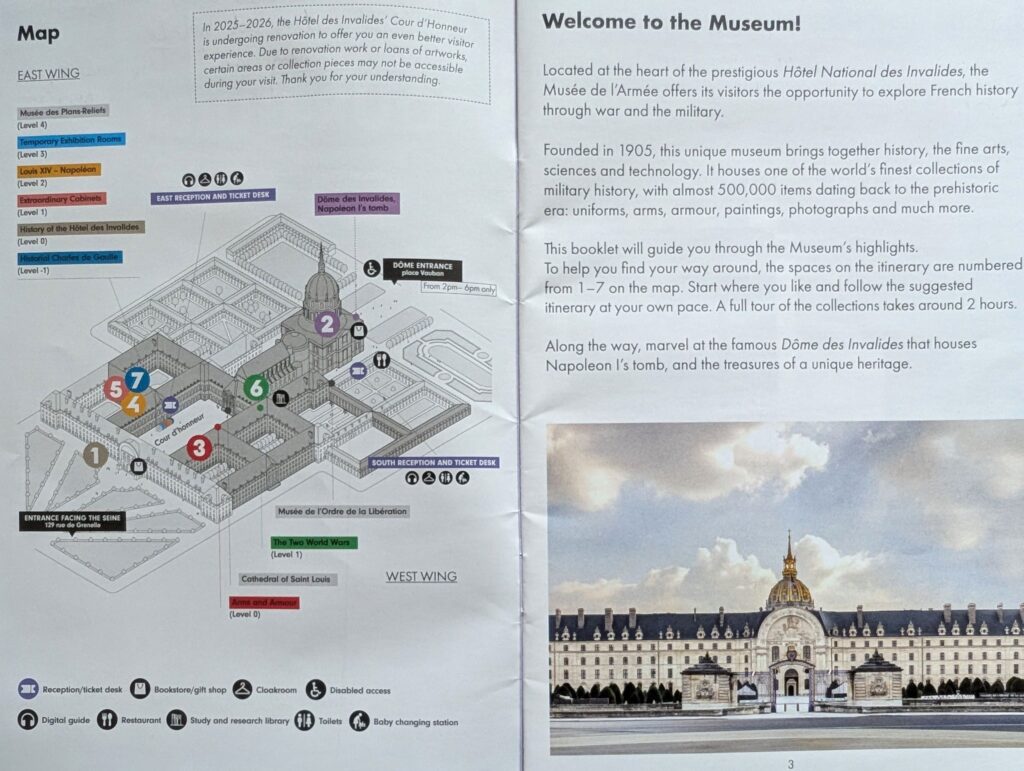
I reflected on this dichotomy during a recent visit to Les Invalides, a four-century-old complex in the 7th arrondissement containing monuments, museums, a military hospital and, famously, Napoleon’s tomb. As Henry Miller wrote in “Tropic of Cancer:”
“They have him where they want him now, the great warrior, the last big man of Europe. He sleeps soundly in his granite bed. No fear of him turning over in his grave. The doors are well bolted, the lid is on tight.”
I don’t recommend Miller’s book, by the way, even though I thought it was thrilling when I read it as a student in Paris decades ago. This time, I found the sexism, antisemitism and misogyny so bad that I returned it to the library immediately.
The Invalides is one of those places in Paris that holds great meaning for me even though I almost never go there. Our first apartment in Paris was practically across the street—the avenue de Tourville—from the golden dome crowning the tomb and, behind it, the cathedral. Yes, cathedral, to serve the French military.
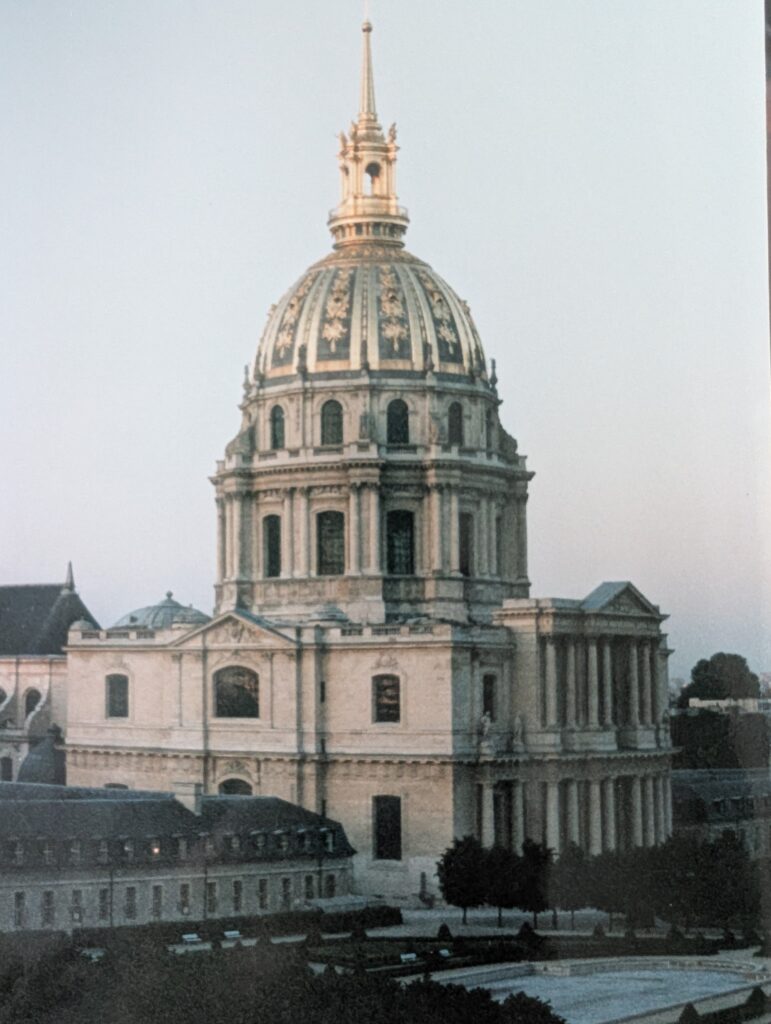
Circa 1997
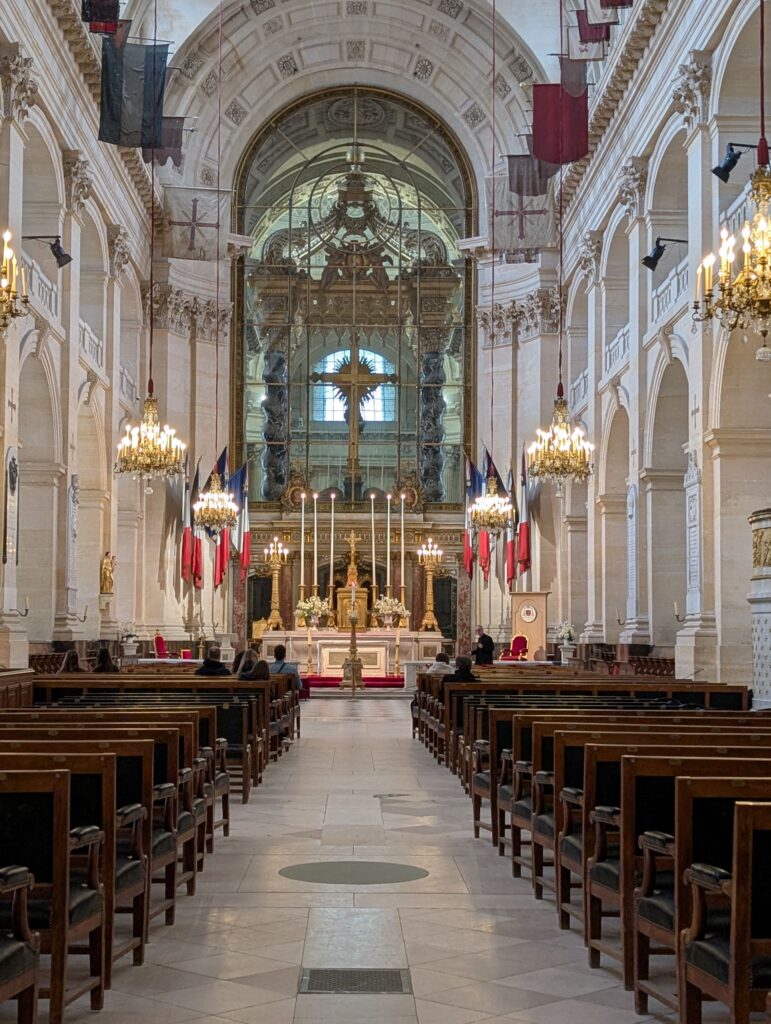
A functioning military hospital still lies within the grounds, and there are also beds for elderly retirees. The hospital was commissioned by King Louis XIV; some 6,000 disabled soldiers were admitted between 1676 and 1690. Long before Napoleon. No tourists allowed now, and rightly so.
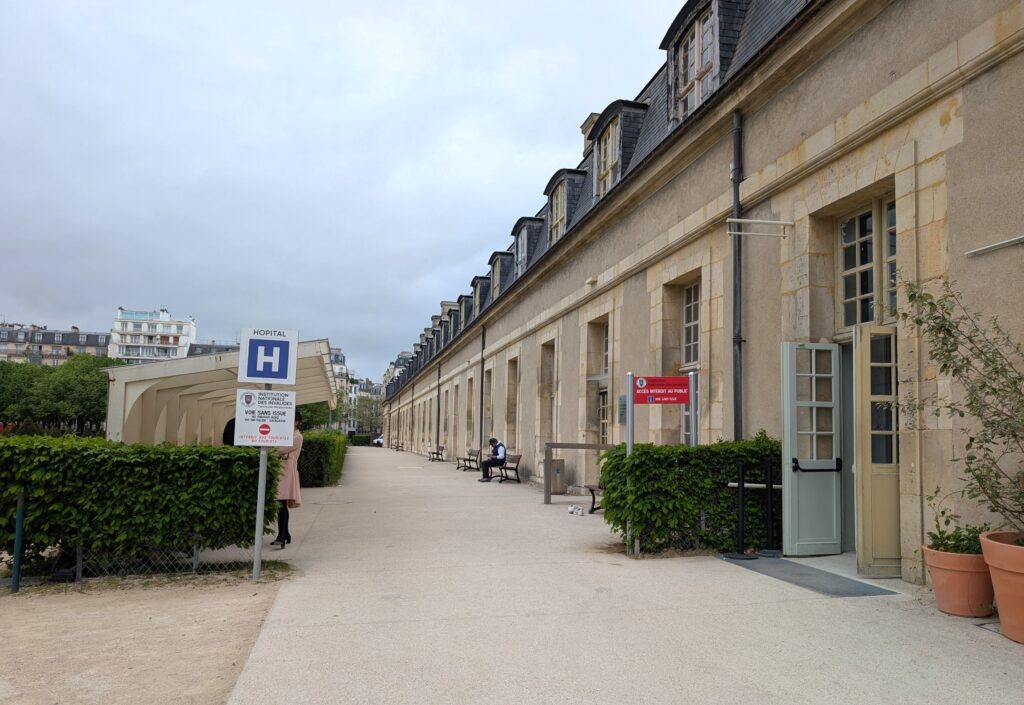
Napoleon was very proud of the Invalides, making seven visits to it during his time as First Consul and then Emperor. He had the dome re-gilded, the lighting restored and the cathedral’s cross replaced. He also insisted that each resident veteran be allotted five shirts rather than three. “Nothing is too good for my brave ones,” he said.
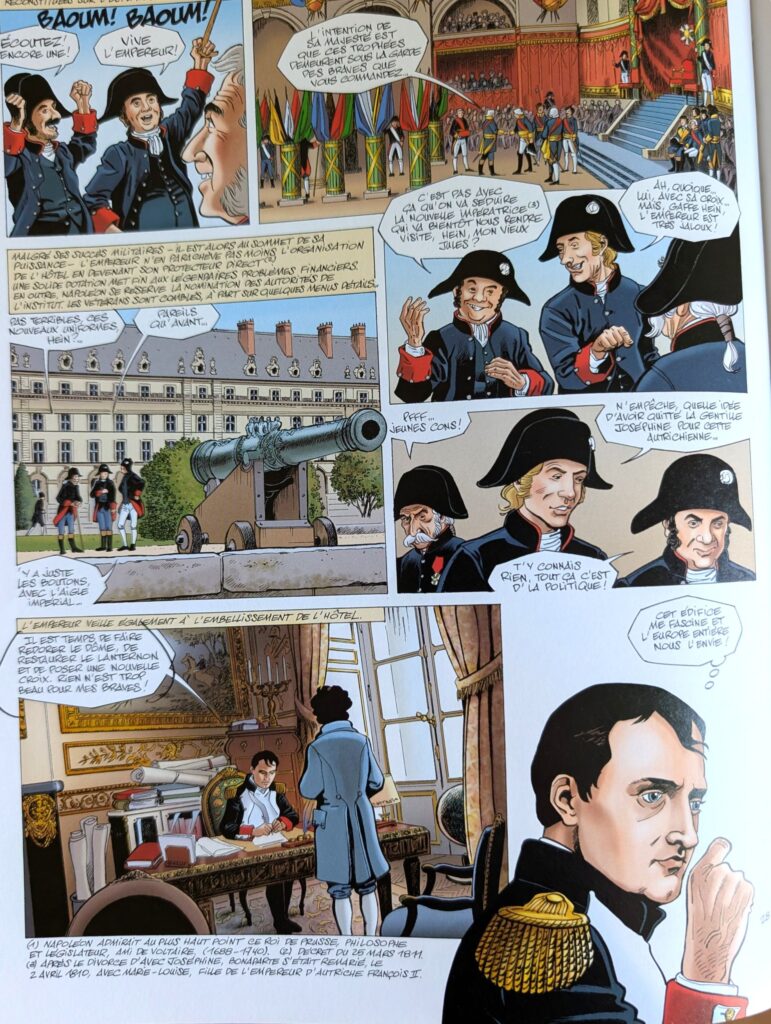
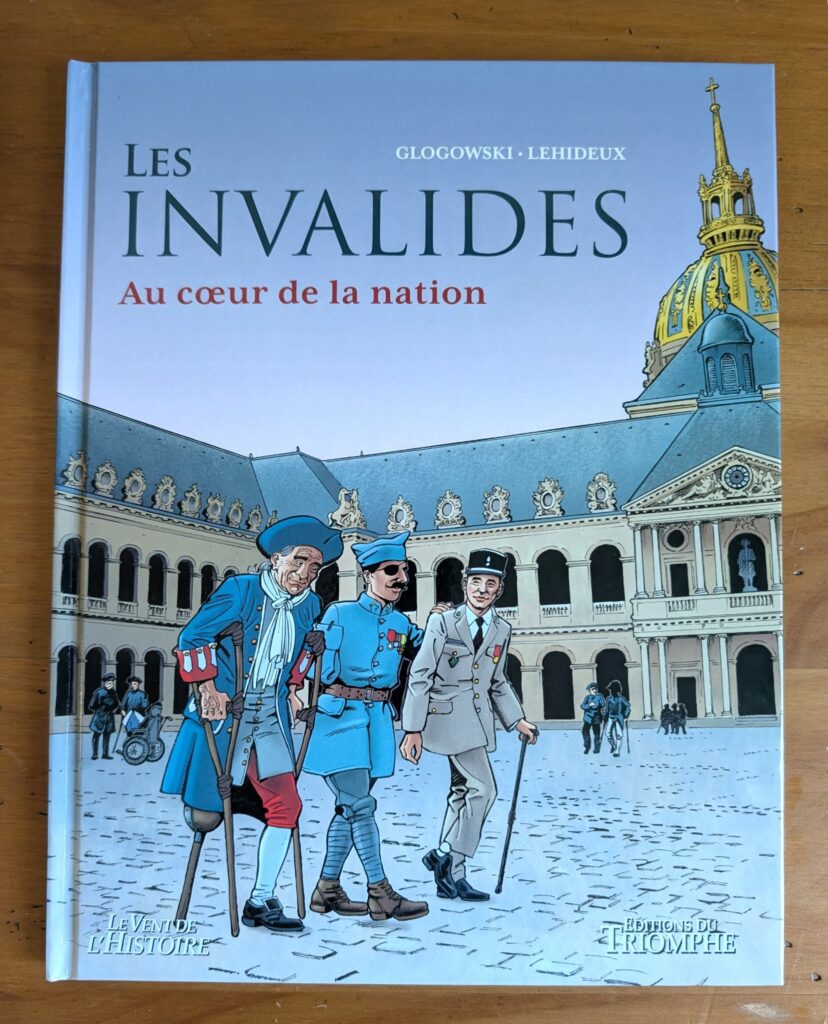
I learned this and many other interesting things from a book I bought at the gift store. It is a bande dessinée, a very popular format in France and Belgium, and not just for children. Google Translate calls it a comic strip, but it’s really more like a graphic treatment. Think Tintin. I learned, for instance, that the Invalides building—195 meters, or 640 feet long—was constructed on a country terrain that had been mostly vegetable gardens. And that the chapel was dug out down to the lower level to accommodate Napoleon’s sarcophagus, interred 19 years after his death on St. Helena in 1821.
Today, only 60 retirees are resident, and there are 60 beds to care for wounded military and a few civilians. Under Napoleon, some 3,000 veterans were patients there. Of course, given the Emperor’s wars of aggression, it’s not surprising so many were wounded, not to mention killed.
Those wars stamped not just the Invalides, where generals including Duroc and Bertrand are also entombed, but Paris. The sections of the city’s historic inner ring road are named after 19 of Napoleon’s 26 marshals, including Boulevard Berthier, which we cross whenever we go to the street market north of our apartment. Other streets that bear Napoleonic generals’ names: Avenue Kléber, Avenue Hoche and Avenue Marceau, which all feed into the mixmaster of the place de L’Etoile. (The Arc de Triomphe was commissioned by Napoleon in 1806 but finished after his death.)
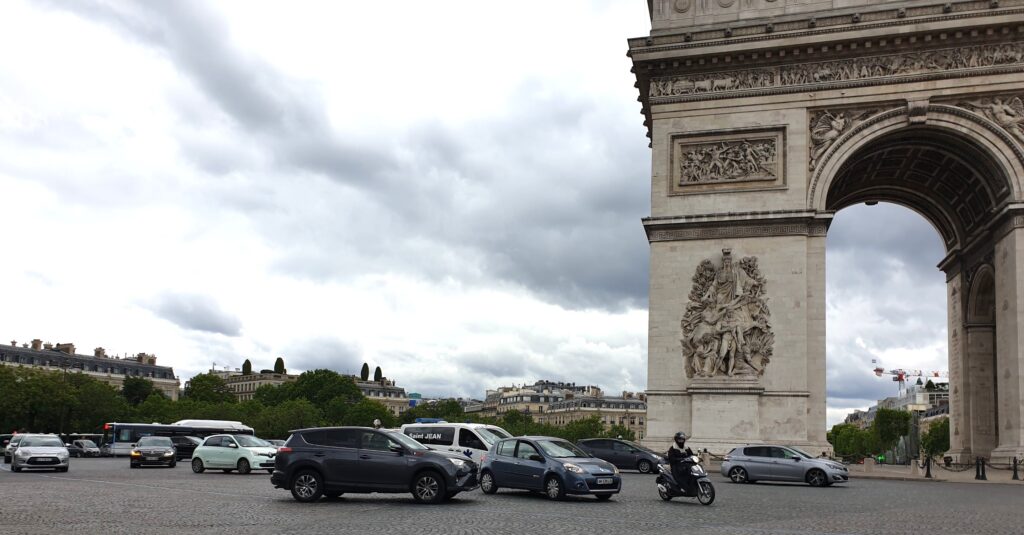
Napoleon’s (successful) battles, too, served to name Paris streets, including four more that pour into the Etoile: Friedland, Wagram, Ièna and, unsurprisingly, Grande-Armée. Austerlitz, one of his greatest victories, didn’t get Etoile placement but was affixed to a street, a quai and a train station.
“If I had succeeded, I should have been known as the greatest man in history,” Napoleon wrote from St. Helena, according to “Napoleon,” by Felix Markham. Maybe I’m obsessed with this subject, but clearly this is someone who could distinguish failure from success.
Waterloo, also unsurprisingly, gets nothing, given that it was the battle that finished Napoleon off for good. The rue Bonaparte, which runs from the Seine to the Jardin du Luxembourg, is long, central and fashionable, but lacks avenue width and grandeur. That’s because it was (re)named in 1852, before Napoleon III (the Invalides tenant’s nephew) and Baron Haussman launched the enormous remaking of Paris that spawned a need for many new street names.
But I digress.
The Invalides complex is also home to a military museum that celebrates not just Napoleon’s wars but the ones before and after.
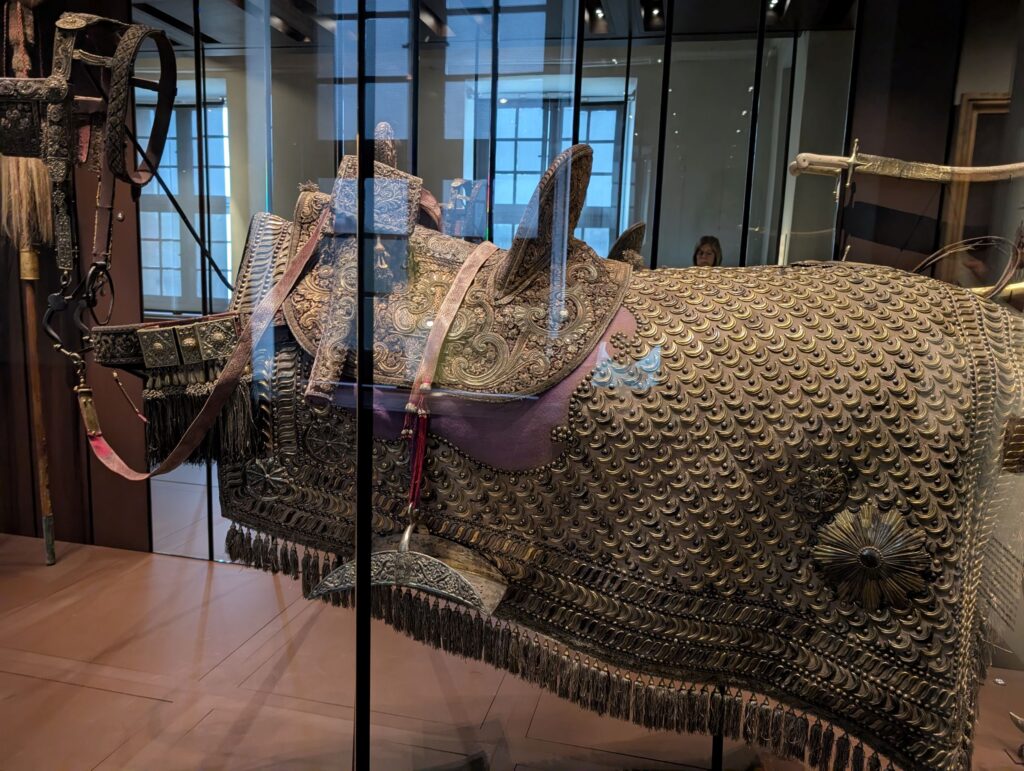
Fearful of mission creep, I only visited the sections devoted to the various Napoleonic wars. As an equestrian, I was amazed by the saddles. They were clearly designed to help the warriors stay on, but they looked heavier even than the mightiest battle horses could have tolerated. Also, is that covering made of gold?
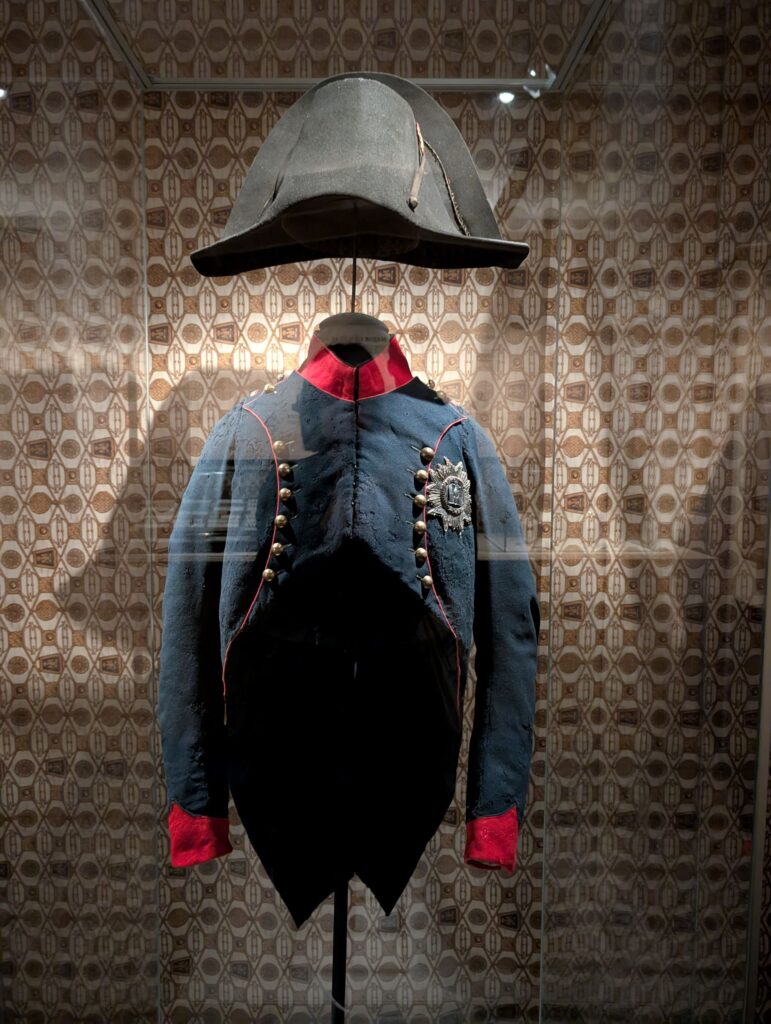
I was pleased to see a Napoleonic hat and uniform and to learn for the first time why the bicorne was made in that famous shape: to let the rain drip off.
I left feeling quite sure which gold-loving, power-seeking autocrat I preferred.
Anne, another wonderful column! Thank you for your reflections and savvy narrative! Joan
Thank you, Joan!
What a great post today. We visited about a year ago and thoroughly enjoyed the museum. I hadn’t realized that there was still a hospital attached.
Thank you so much!
Another fascinating Paris glimpse. Bien fait! Can this be shared on FB?
Thanks Andy, and yes! I generally post it on FB the day after to give subscribers first crack, but feel free!
Nicely done, Anne. Too bad you never had the opportunity to converse on this subject with Jo, who knew it particularly well.
Thank you and I’m sorry about that too.
You modestly omitted the fact that your avenue de Tourville apartment was in every good way nearly as grand as les Invalides themselves.
One of the small mysteries for me is why the 17th century architects of the complex — Libéral Bruant and Jules Hardouin-Mansart (the golden-domed chapel) — are not as well known as, say, Haussmann or Eiffel. (I needed Google to remind me of the names.)
Well, Mansart did get his name on the roofs…..
It was a great apartment. But devoid of gilding.
i so enjoyed this….it took me 3 or 4 visits to Paris before I got to les Invalides but it is an interesting place!
the tomb reminded me most of John paul Jones in the Naval Academy chapel…
Many thanks!
Thanks . One of your best!
Why thank you, Gary!
Thank you. Spent practically most of the day at the Invalides. The war museum is astounding, with the long list of France’s not infrequent military involvements detailed.
You are welcome! And yes, one could spend hours there.
Thanks for sharing your insights Anne- I always enjoy reading your blog. Comparisons are always a good way to learn and stay rational. Hard to do when talking about the current White House occupant.
Thank, Pat! Yes, we need to talk about it but we also need to stay sane…..
Fantastic article Anne…Bravo!
Many mercis, Sue!
Thank you for sharing this history. We are staying just around the corner from Les Invalides and have visited the museum several times–truly a fascinating and beautiful place. Your thoughtful perspectives are greatly appreciated as we are spending so much time in Paris.
Thanks so much, I really appreciate that!
Ann, you are such a great writer and always there to shed some lights on during the crazy times we are living through
Aw Jacques, thank you so much for those kind words!