
France, too, is a mess.
The country is on its fifth prime minister in two years, the result of a foolish decision by President Emmanuel Macron to call early parliamentary elections last year. The result was a legislature divided into three bill-stopping blocs. More than 500,000 people demonstrated last week, shutting down many public services, against any measures to reduce the yawning deficit and debt. Meanwhile, ratings agencies are downgrading France’s debt, leading to higher interest rates, and the economy is barely inching along. Public dissatisfaction is boosting the far right as elections approach in 2027.
The word “ungovernable” is often heard these days.
But note what isn’t happening in France: No one is firing bureaucrats for no reason, undermining the accuracy of government statistics, ignoring judicial rulings, investigating political opponents, issuing unfounded medical policies, meddling with the central bank, lying about the opposition party, reversing environmental regulations and so on.
That is, France continues to be a country where institutions – the justice system, the regulators, the central bank, the vast bureaucracy – are respected. Even as the politicians are not. Macron’s popularity, for instance, is down to about 15%.
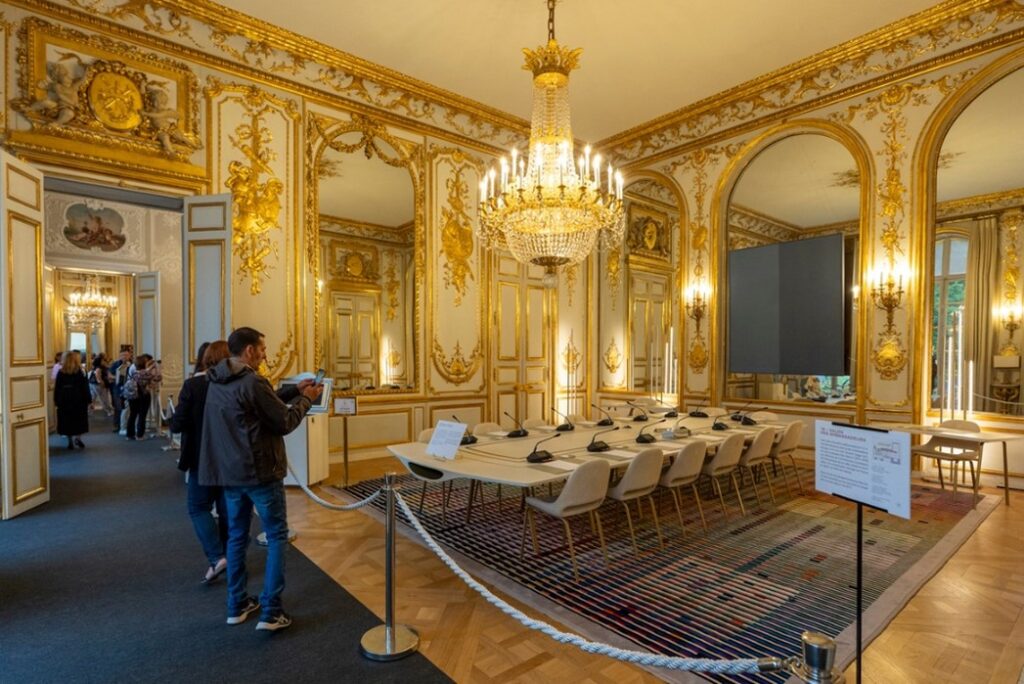
Photo: Elysee Palace
To find an example of a trusted institution, I took advantage of a very special weekend: European Heritage Days. Once a year, in France and elsewhere, normally secretive establishments open their doors to the public. People could tour the presidential and prime ministerial palaces, visit the lower house and the Senate and do any of 18,500 things around the country on Saturday and Sunday. Everything from the Towers of Notre Dame, open for the first time since the fire, to an Art Deco theater in Lyon.
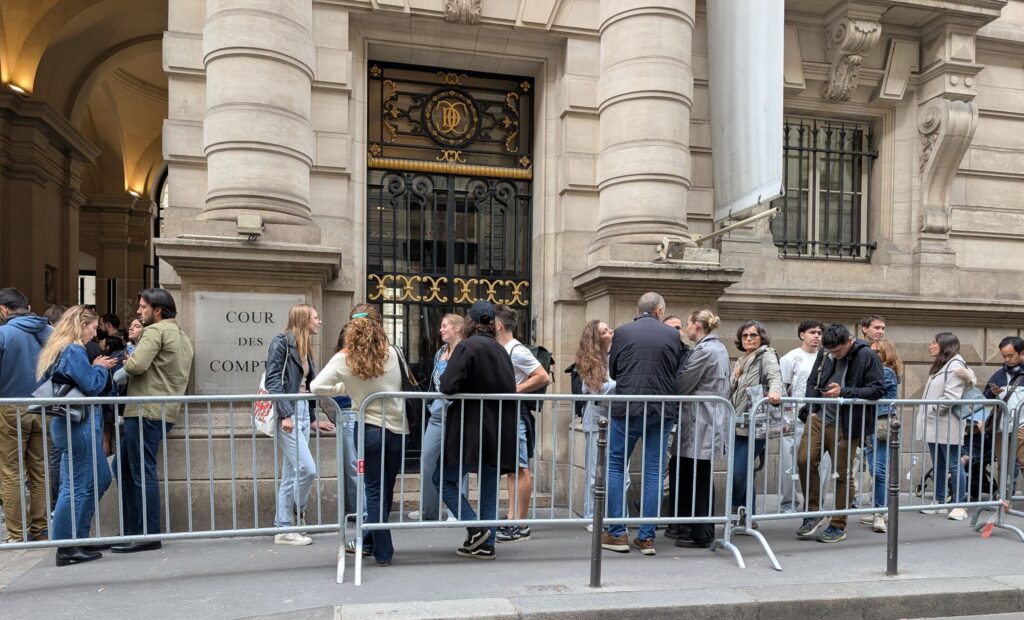
My choice: The Cour des Comptes. That loosely translates as the Audit Office, the department that tracks government spending and – very important – penalizes and fines violators. Since its founding in 1807 the Cour has been independent of both the executive and the legislative branch, but its rulings must be obeyed. I am trying to imagine how to explain that to the current American president.
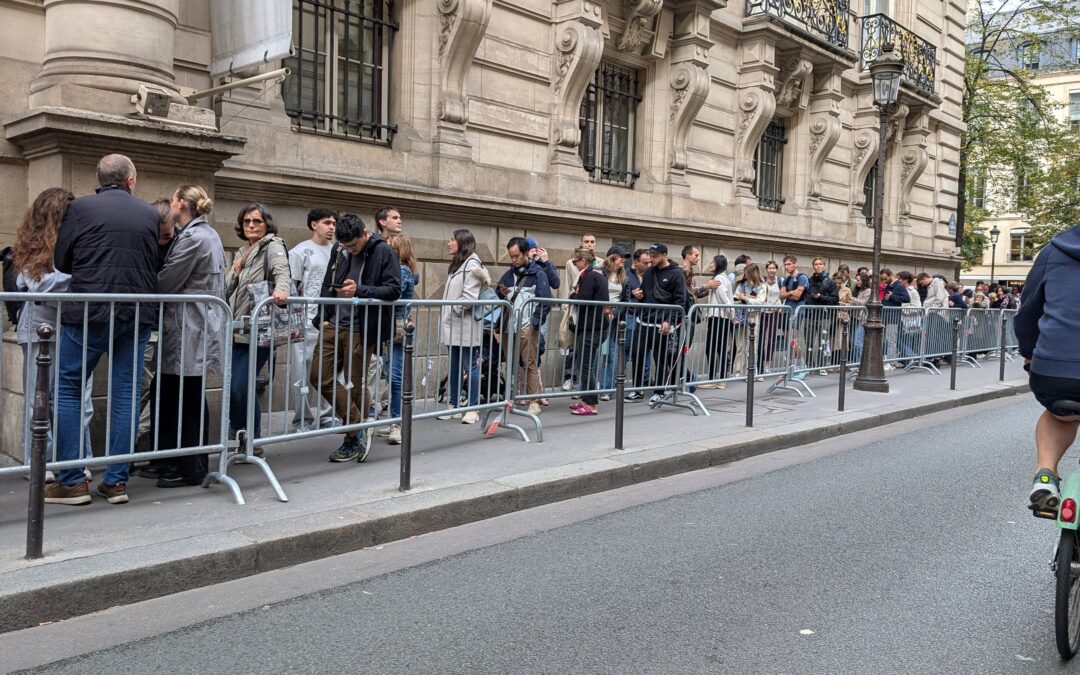
The body’s mission sounds a little dry, but the line to get in was 30 minutes long.
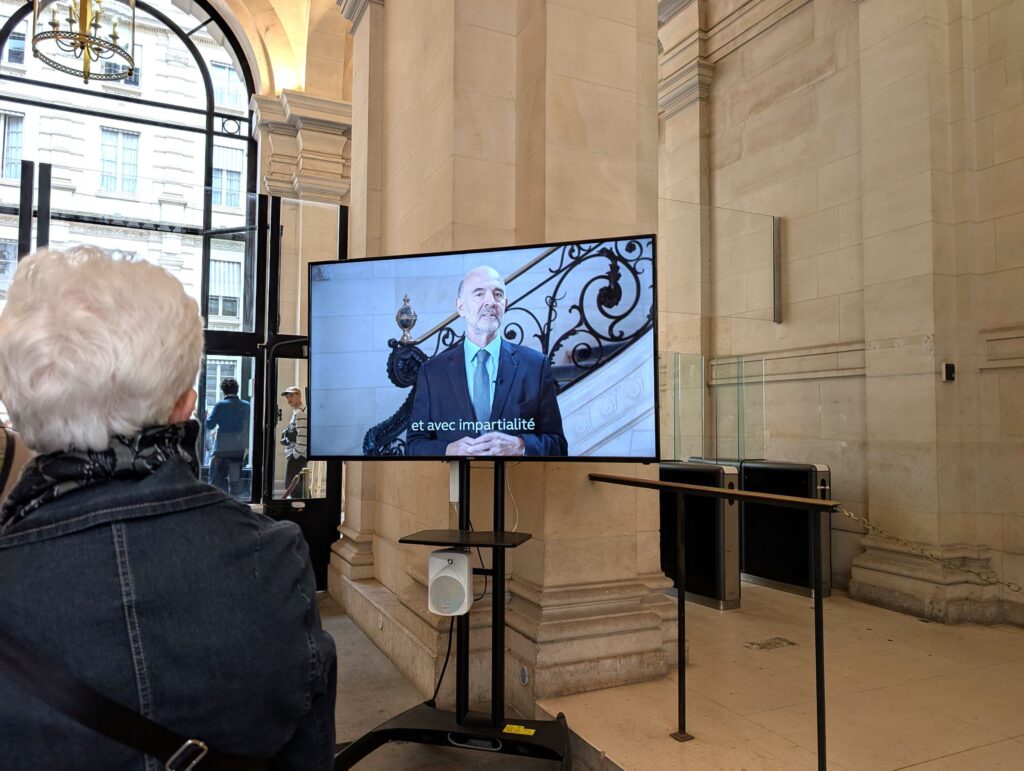
Like many institutions on this special weekend, the Cour des Comptes showed its best to the visitors.
We were greeted on entering with a video from Pierre Moscovici, a longtime politician and cabinet member who has been First President of the Cour since 2020. He emphasized the body’s independence and impartiality. In case anyone wonders, the first First President was one François Barbé-Marbois, a minister to Napoleon I.
Presentations went on all day on such topics as the costs of the 2024 Olympics, how taxpayers financed public transit, prevention of early diabetes, the financial health of the retirement system and so on. I wanted to go to the session on tax equity but it was already full when I got there. The day ended with what was supposed to be a dialogue between Moscovici and the public, though from what I could see online it was mostly Moscovici talking.
The rooms and halls were jammed with visitors, as was the library. There were at least 200-300 people in the building at any given time.
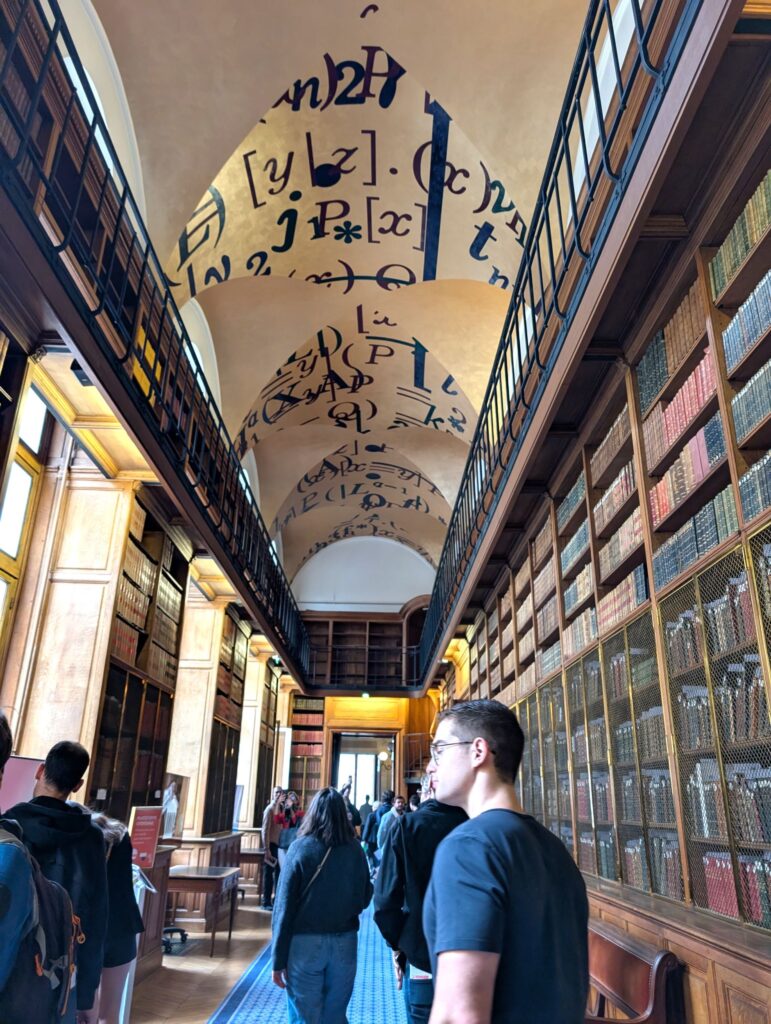
Magistrates, as the Cour’s officials are called, wear robes with ermine trim, even today.
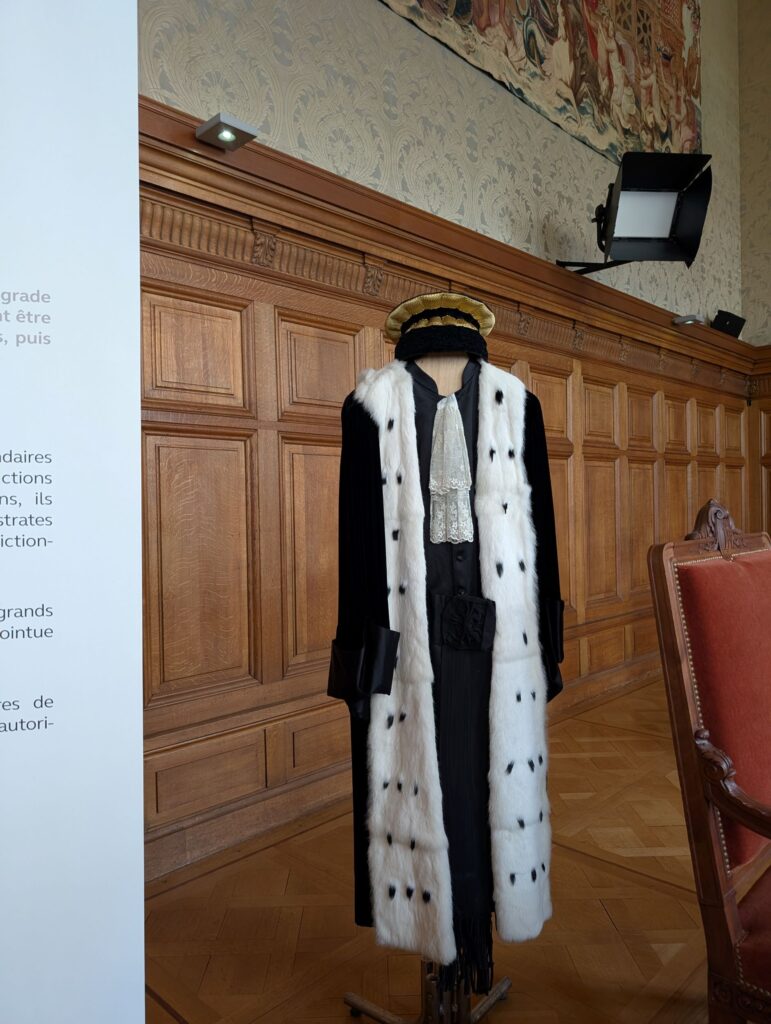
Several were present in the large auditorium, though without the ermine.

They agreed that the Government Accountability Office in Washington was probably the closest equivalent to their institution, though they have enforcement powers and it doesn’t. Also, the Trump administration has ignored several of the GAO’s findings recently: Budget director Russell Vought called a report objecting to the withholding of funds for an electric-vehicle program “non-events with no consequence.”
I tried to get the magistrates to talk about that but got only: “I would have thought your three branches of government would have been stronger.” Indeed. They did tell me, in response to a question, that the magistrates tend to come from the National School of Administration, the best postsecondary school in the country and producer of top bureaucrats, including Macron.
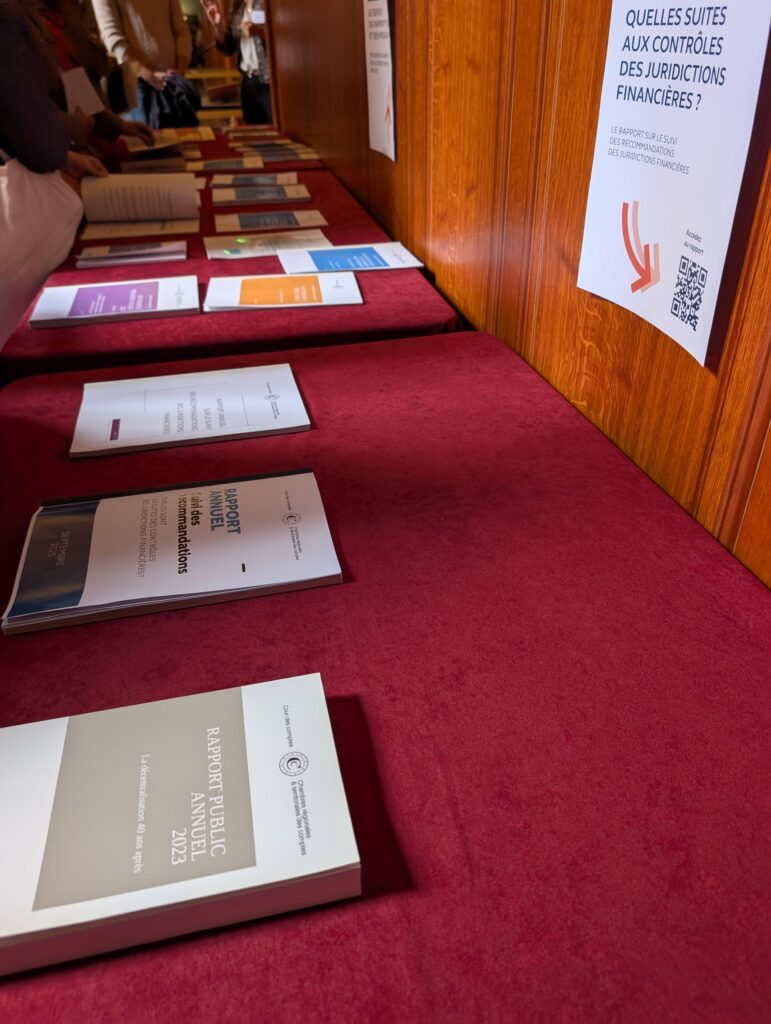
There were lots of reports to peruse, and tchotchkes to buy at the bookshop.

And at the very end was a board where people could post what they thought of the visit (Livre d’Or, Golden Book, is the term for guestbook). “Thank you to all the professionals for making themselves available to explain the Cour des Comptes,” said one.
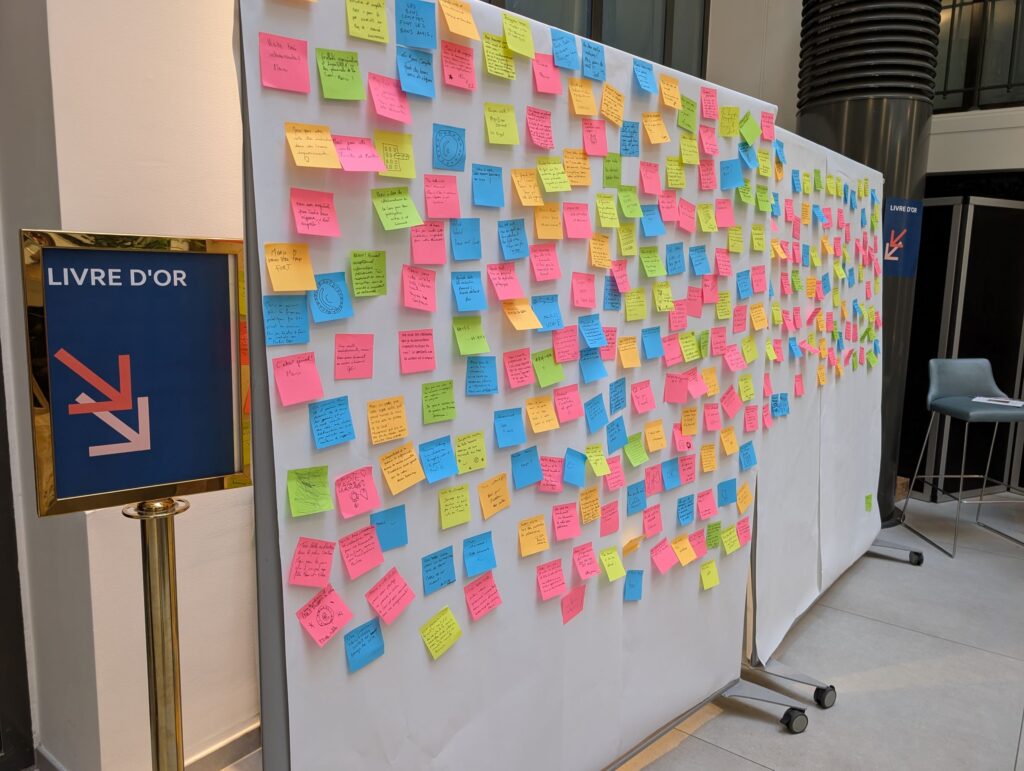
I thought of writing “Thank you for restoring my faith in government,” but I knew no one in Washington would read it.
Thank you so much for explaining their more logical and sane way of doing finances! Loved the article!
Thanks so much, Lana! I appreciate that.
You got that right- they won’t read it.
What a cute couple of officials- and as usual Anne, a very interesting and educational read. Wish I were in France, Spain, Germany, Sweden, Lithuania, about anywhere but here.
Thanks
Thanks, Shaune. Come on over!
Thank you, Anne. This comparison is important and restores some hope, even for that other country. Impressive to think those offices were so popular!
Thank you Debbie! It was indeed restorative, and also great to see how much the bureaucrats seem to like their work.
Great analysis! Was unaware of the heritage day tradition. It must be very popular in France where the bureaucracy can seem overwhelming. Love the way you used photos to bring the story to a personal and accessible plane. Interesting to think about how France has some of the same political division as the US but is on a different path at least for now. But political paralysis seems to invite extremism. Thanks for the article!
Thanks so much for your kind words, Gary!
Thanks for this insight on France. As a Canadian with a Parliamentary system France is quite opaque to us, although I have been reading up a bit. And as the French say. En train de partir en France le lundi prochain. Merci
Enjoy and thanks!